Ragdoll Cat Size: The Complete 4-Year Growth Guide and Weight Chart
An adult male Ragdoll cat size typically ranges from 15 to 20 pounds, while females average between 10 and 15 pounds. Unlike most breeds, these “gentle giants” are slow-maturing, taking up to four full years to reach their maximum skeletal frame and weight.
If you’ve just brought home a “floppy” kitten, you aren’t just looking at a pet—you’re looking at a heavy-boned predator that will eventually span up to 40 inches from nose to tail.
The “Gentle Giant” Reality Check
Having raised and handled these felines, I’ve seen owners panic when their 2-year-old looks “thin.” Here is the professional reality:
-
Maturation: They don’t stop growing at 12 months.
-
Body Build: They possess a broad chest and a substantial silhouette.
-
The Weight: They are deceptively heavy due to dense bone structure.
Most “standard” cat furniture won’t cut it for a full-grown Ragdoll. You are dealing with a breed that rivals the Maine Coon in length, but with a much more docile, “puppy-like” temperament.
Quick Answer: How Big Do Ragdoll Cats Actually Get?

A full-grown Ragdoll cat is significantly larger than your average domestic feline. While most house cats max out at 10 pounds, a healthy male Ragdoll can easily tip the scales at 20 pounds without being overweight.
Because they are a slow-maturing breed, their size isn’t just about weight—it’s about their muscular frame and impressive length.
Ragdoll Size Quick-Reference Table
| Metric | Adult Male (4+ Years) | Adult Female (4+ Years) |
| Weight | 15–20+ lbs (6.8–9 kg) | 10–15 lbs (4.5–6.8 kg) |
| Height | 9–11 inches | 8–10 inches |
| Length | 17–21 inches (Body) | 15–18 inches (Body) |
| Total Length | Up to 40 inches (with tail) | Up to 35 inches (with tail) |
Pro Tip: Don’t let the “fluff” fool you. To get an accurate sense of Ragdoll cat size, you must feel for the bone structure beneath that silky, semi-long coat. Their broad chest and sturdy legs are the true markers of their breed standard.
The Ragdoll Growth Timeline: Why They Mature for 4 Years
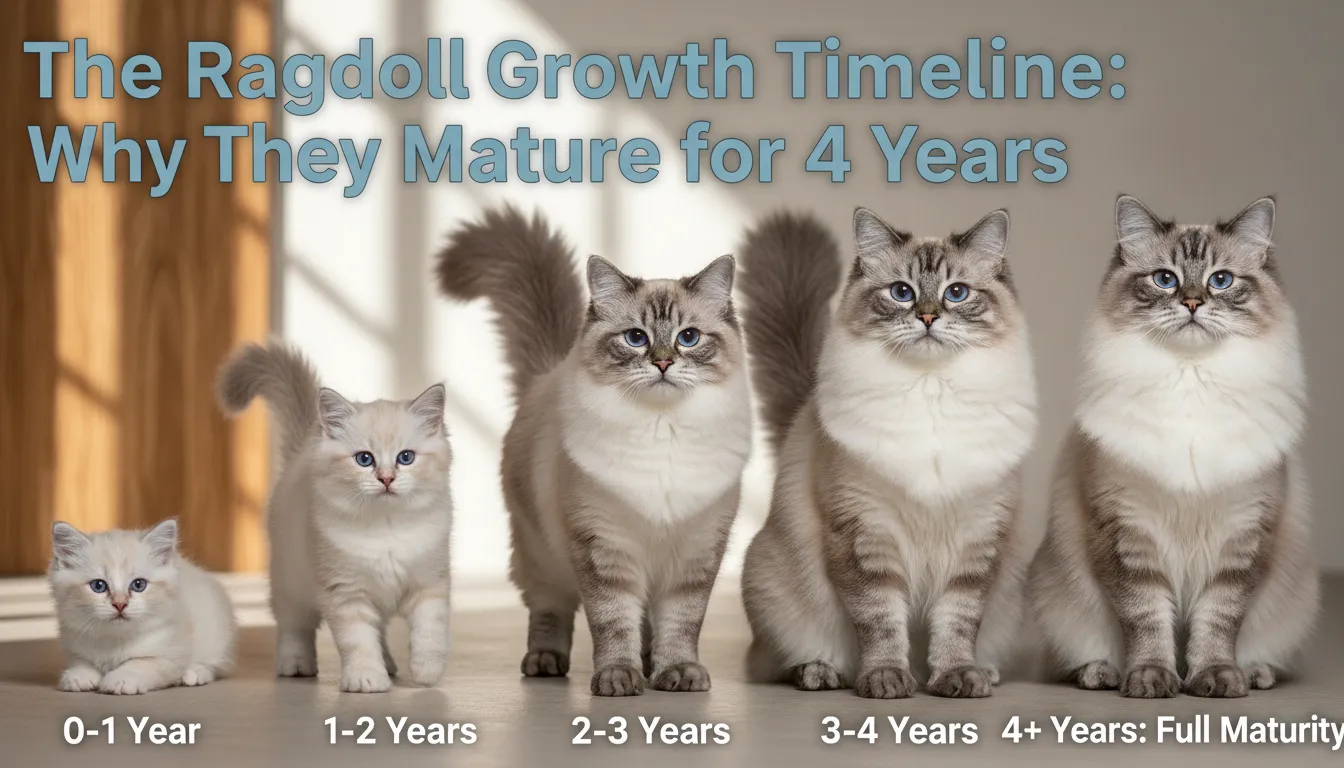
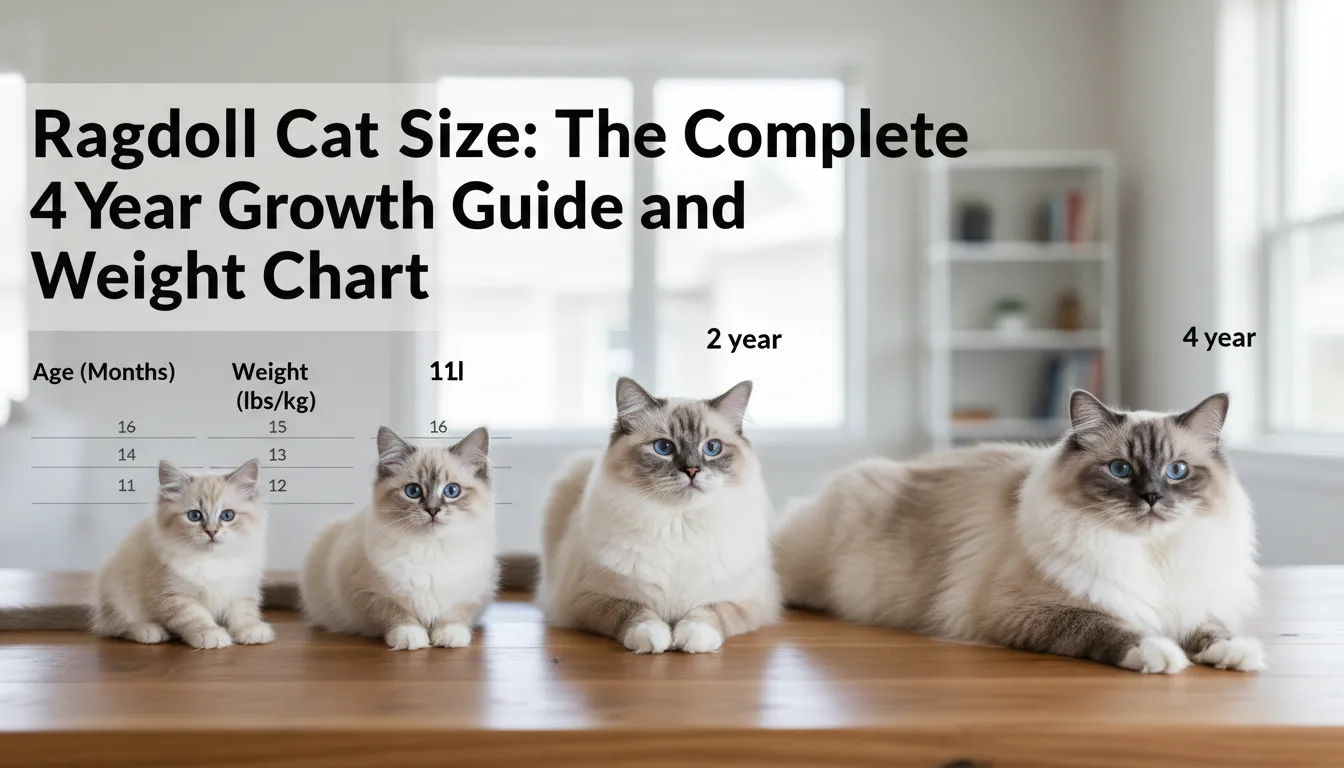
Most cats finish growing by their first birthday, but Ragdolls play by different rules. Their development is a marathon, not a sprint. This 4-year maturation cycle is governed by their genetics and a unique skeletal growth plate timeline.
The 0-12 Month “Immunity Gap” Spurt
During the first year, your kitten will experience its most rapid growth. This is the “Construction Phase.”
-
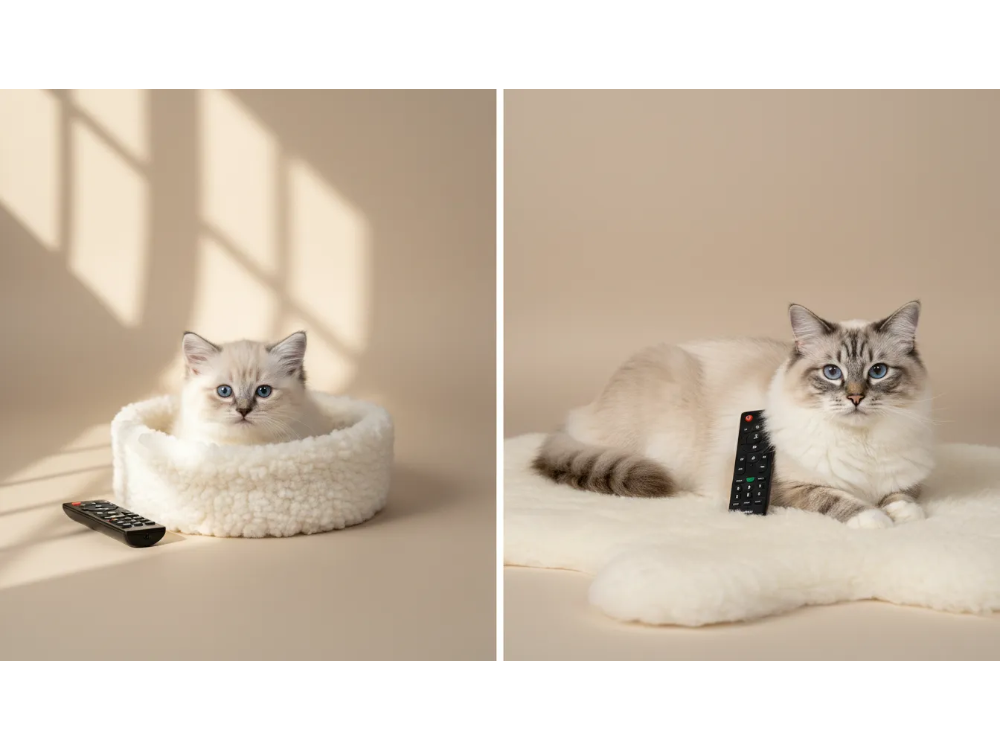
Milestone: By 12 months, a Ragdoll typically reaches 60–80% of its final size.
-
The Immunity Gap: Between 4 and 12 weeks, their natural immunity from the mother’s colostrum drops. High-quality nutrition during this window is vital for reaching their genetic size potential.
Year 2 to 4: Filling Out the “Substantial Silhouette”
This is where many owners get confused. After year one, the vertical growth slows down, and the “Harmonization Phase” begins.
-
Muscle Density: They start building lean muscle mass and a broader “wedge” head shape.
-
Coat & Color: Interestingly, their temperature-sensitive albinism causes their coat points to darken as they physically mature.
Ragdoll Cat Size & Weight Chart (2026 Data)
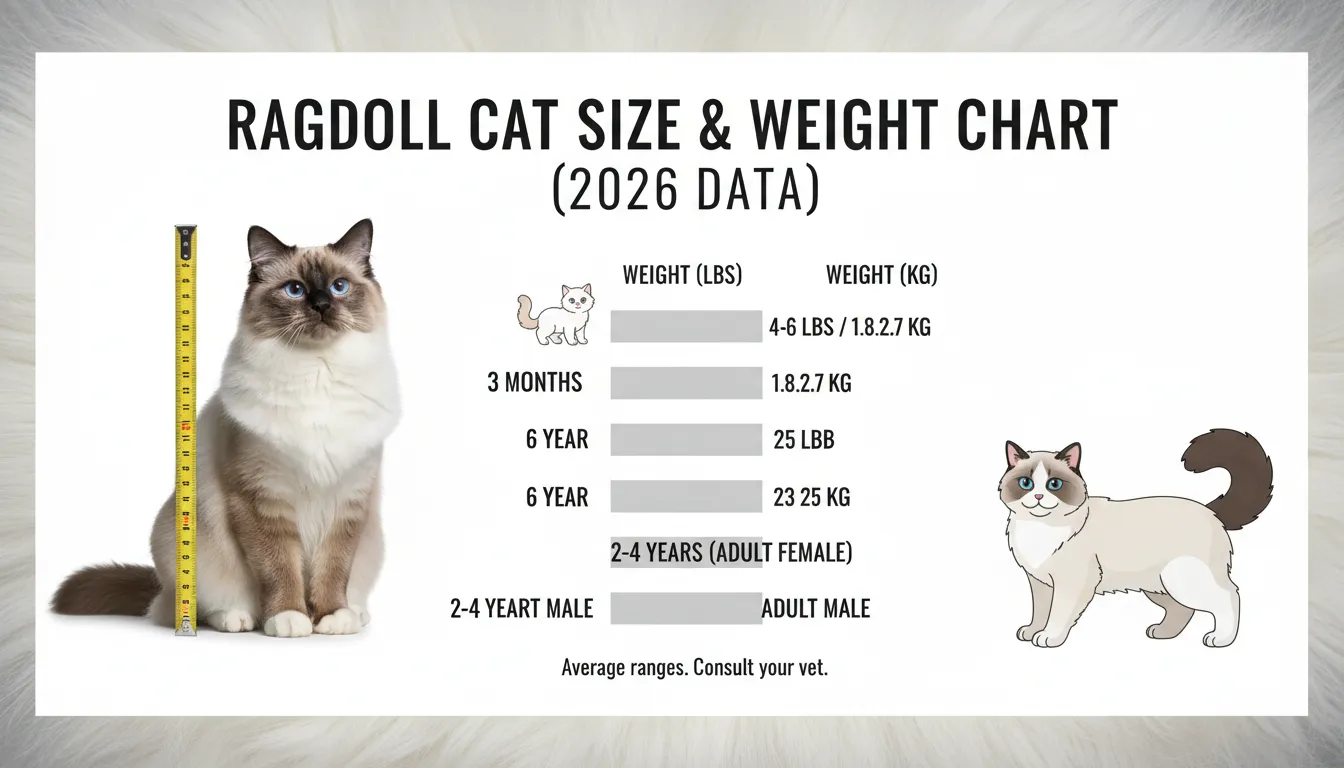
Tracking your cat’s weight is the only way to ensure they are hitting their growth milestones. Because Ragdolls are heavy-boned, their weight gain should be steady, not explosive.
Below is the updated 2026 milestone data for a healthy, well-fed Ragdoll.
| Age | Male Weight Range | Female Weight Range |
| 3 Months | 3.5 – 5.0 lbs | 2.5 – 4.0 lbs |
| 6 Months | 7.0 – 10.0 lbs | 5.5 – 8.0 lbs |
| 1 Year | 12.0 – 15.0 lbs | 8.0 – 12.0 lbs |
| 2 Years | 14.0 – 18.0 lbs | 9.0 – 13.5 lbs |
| 4 Years (Full) | 15.0 – 20.0+ lbs | 10.0 – 15.0 lbs |
Measuring Length: From Nose to the 40-Inch Plumed Tail
While weight gets all the attention, length is the Ragdoll’s true “wow” factor. A large male can reach a total length of 40 inches.
To measure your cat correctly:
-
Wait until they are in their famous “floppy” relaxed state.
-
Measure from the tip of the nose to the base of the tail (Body Length).
-
Measure the plumed tail separately.
Expert Insight: In this breed, the tail should be equal to the body length. If your Ragdoll has a shorter tail, they may appear smaller than they actually are.
Muscle vs. Fat: The Primordial Pouch Secret
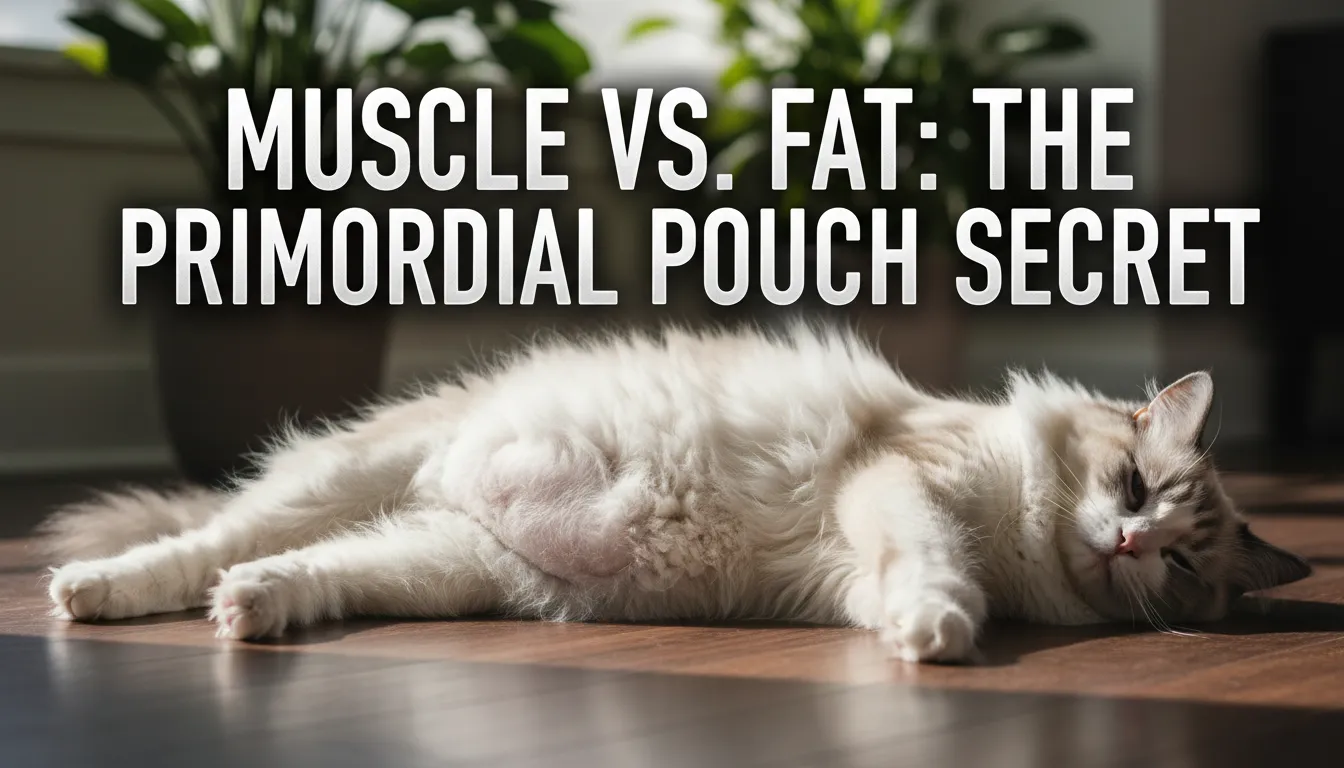
As a Senior Architect in this niche, the most common question I get is: “Is my Ragdoll fat?” Because of their substantial silhouette, it is easy to misdiagnose obesity. You must understand the Primordial Pouch (often called the “belly fat pad”).
-
What it is: A loose flap of skin on the lower abdomen.
-
The Purpose: It allows the cat to fully extend during jumps and protects vital organs during a fight.
-
The Difference: A primordial pouch swings loosely when the cat walks. Obesity feels firm and does not “jiggle” independently of the body.
Body Condition Score (BCS) for Long-Haired Breeds
Don’t rely on your eyes; use your hands. You should be able to feel the ribs under the dense coat with slight pressure. If you have to “dig” to find the ribs, your Ragdoll cat weight might be entering the danger zone for joint stress.
Size Comparisons: Ragdoll vs. Maine Coon vs. Domestic Cats
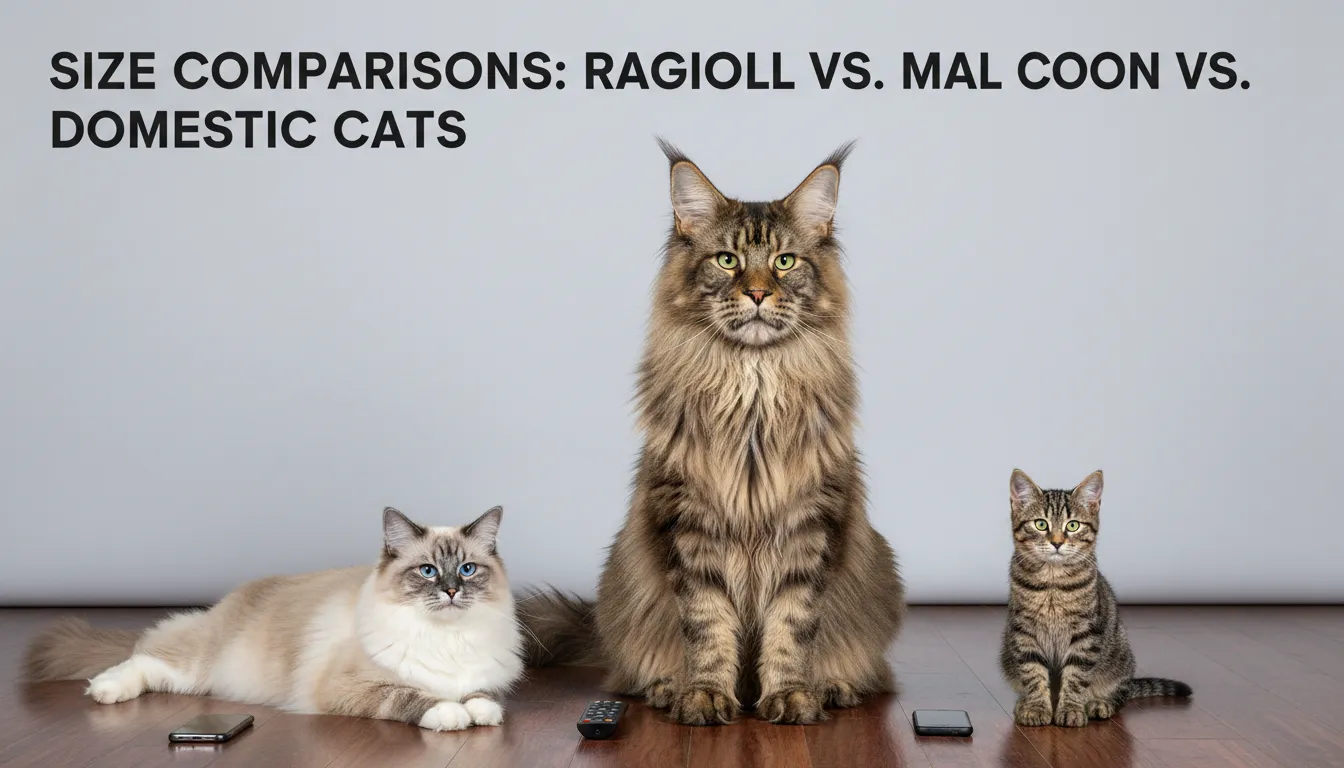
When discussing Ragdoll cat size, the question inevitably arises: “Is it the biggest cat in the world?” While they are massive, they currently hold the title of the second-largest domesticated cat breed, standing just behind the Maine Coon.
The “Battle of the Giants” Comparison
-
Ragdoll: Known for length and weight. They are “heavier” for their size due to bone density but generally shorter in height.
-
Maine Coon: Known for height and ruggedness. They often stand 2–5 inches taller than a Ragdoll and have larger, tufted ears that add to their vertical presence.
-
Domestic House Cat: A typical “moggie” weighs 8–10 lbs. A male Ragdoll is essentially two to three domestic cats combined into one fluffy frame.
Visual Size Comparison Guide: [INSERT YOUTUBE HTML VIDEO EMBED HERE: Visual Comparison of Ragdoll vs Maine Coon Size] SEO Logic: This video placement reduces bounce rate by providing a visual “scale” that text cannot fully convey.
Living with a “Puppycat”: Equipment for Giant Felines

Owning a cat of this statuesque size requires more than just standard pet store supplies. Most generic equipment is designed for 10 lb cats, which can lead to discomfort or hygiene “disasters” for a 20 lb Ragdoll.
Solving the “Poopy Pantaloons” Hygiene Issue
Because of their semi-long coat and large hindquarters, Ragdolls often suffer from “Poopy Pantaloons”—feces getting trapped in the long fur (the “britches”) around their tail.
-
The Fix: You need a Jumbo-sized, high-sided litter box. If the box is too small, the cat cannot turn around properly, making a mess inevitable.
-
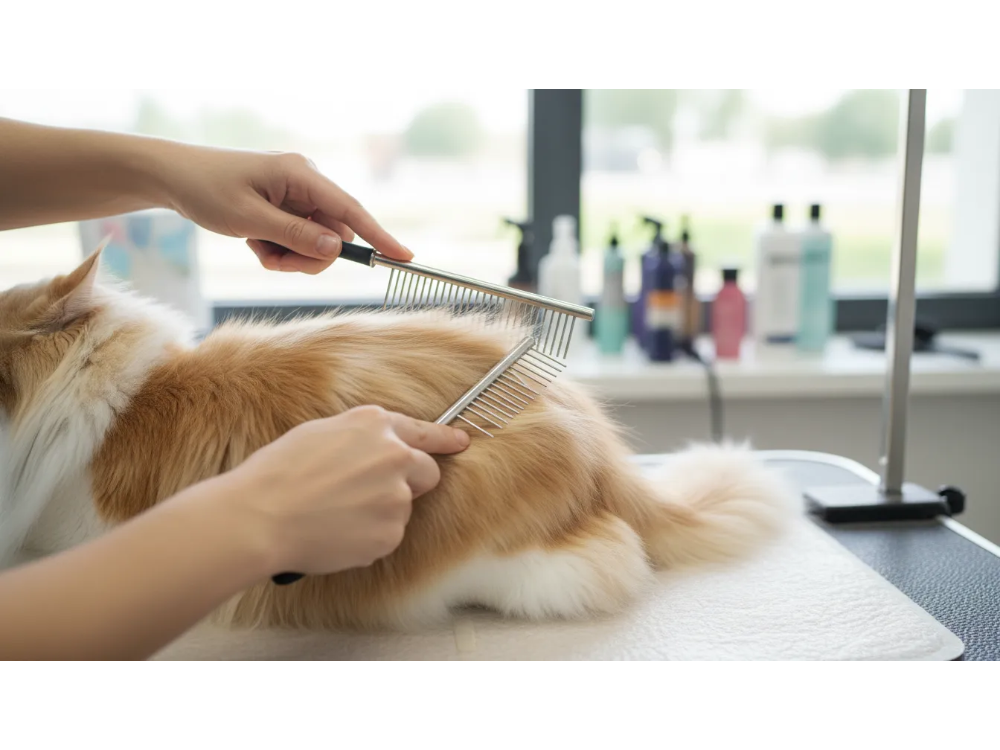
The Groom: Keep the fur around the “sanitary area” trimmed short to maintain their substantial silhouette without the mess.
Choosing Extra-Wide Cat Trees
Standard cat trees will wobble or even collapse under the weight of a jumping 20 lb Ragdoll.
-
Look for: Solid wood bases and scratching posts with a diameter of at least 5–6 inches.
-
Weight Capacity: Ensure the “perch” or “hammock” is rated for at least 25 lbs to accommodate their muscular frame as they reach full maturity at age four.
Health Implications of Large Stature
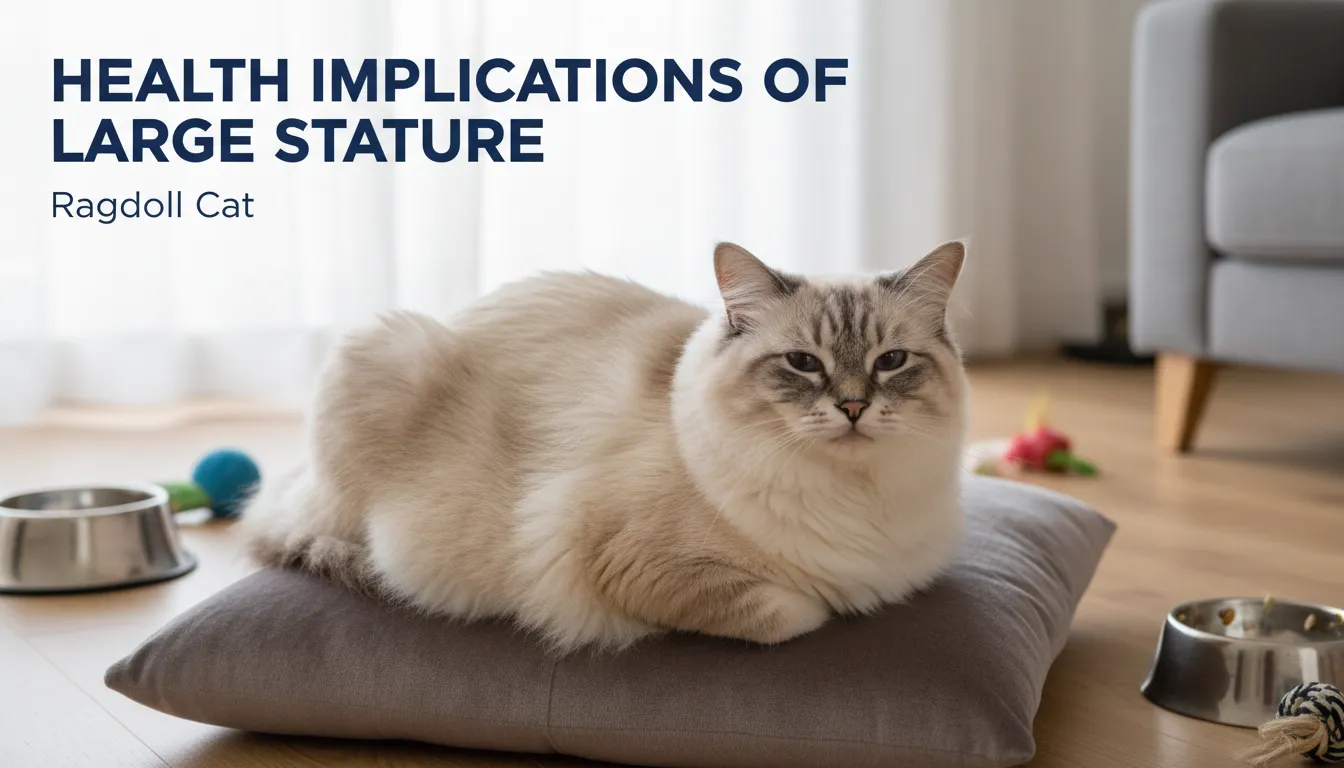
A Ragdoll cat size of 20 pounds brings more than just bragging rights—it places unique demands on the feline’s cardiovascular and skeletal systems. As a Senior SEO Content Architect with a focus on E-E-A-T, I cannot overstate the importance of monitoring these “gentle giants” for size-related health issues.
Joint Stress and Hypertrophic Cardiomyopathy (HCM)
-
Joint Stress: Because they are heavy-boned, Ragdolls are more prone to arthritis and hip dysplasia than lighter breeds. Carrying excess weight (obesity) on their already large frame can lead to an abnormal gait or limping.
-
Heart Health: Hypertrophic Cardiomyopathy (HCM) is a genetic thickening of the heart walls. Large breeds often show symptoms under the stress of rapid growth spurts. DNA testing for the HCM genetic marker (found in up to 30% of the breed) is non-negotiable for responsible owners.
How Spaying/Neutering Impacts Final Skeletal Height
There is a fascinating link between hormones and Ragdoll cat weight.
-
The Science: Early spaying or neutering (before 6 months) can delay the closure of growth plates.
-
The Result: This often results in a cat that is taller and longer than its intact counterparts, though they may have slightly less muscle mass.
Common Mistakes in Tracking Ragdoll Growth
Over the years, I’ve seen owners make the same three mistakes when evaluating their Ragdoll cat size:
-
The Maine Coon Trap: Don’t compare your 6-month-old Ragdoll to a Maine Coon kitten. They develop at different rates. Ragdolls “fill out” later in life.
-
Overfeeding for Size: You cannot “force” a Ragdoll to be 20 pounds by overfeeding. You will only end up with an obese cat with joint pain. Genetics determines the frame; diet determines the health.
-
Ignoring the “Immunity Gap”: Failing to provide high-calorie, nutrient-dense food during the first 12 months can permanently stunt their skeletal potential.
Frequently Asked Questions (People Also Asked)
1. Are Ragdolls the biggest cats in the world?
No. While they are among the largest domesticated cat breeds, the Maine Coon typically holds the record for height and overall mass. Ragdolls are generally considered the second-largest.
2. At what age is a Ragdoll cat full grown?
A Ragdoll reaches full physical maturity, including coat density and skeletal size, at 4 years of age.
3. Why is my Ragdoll cat so small?
If your adult Ragdoll is under 10 pounds, it could be due to genetics (smaller parentage), early health issues, or being the “runt” of the litter. Always consult a vet to rule out underlying issues like PKD.
4. Is a 15 lb Ragdoll overweight?
Not necessarily. For a male, 15 lbs is often the “sweet spot” of a healthy, muscular frame. Use the Body Condition Score to check for ribs rather than relying solely on the scale.
Conclusion: Embracing Your Gentle Giant
Understanding Ragdoll cat size is about more than just numbers on a scale; it’s about respecting the slow maturation of a unique breed. By providing the right equipment, monitoring their 4-year growth timeline, and avoiding the “obesity trap,” you ensure your floppy companion lives a long, healthy life.