Ragdoll Temperament: The Complete 2026 Guide to the “Puppy-Cat” Personality
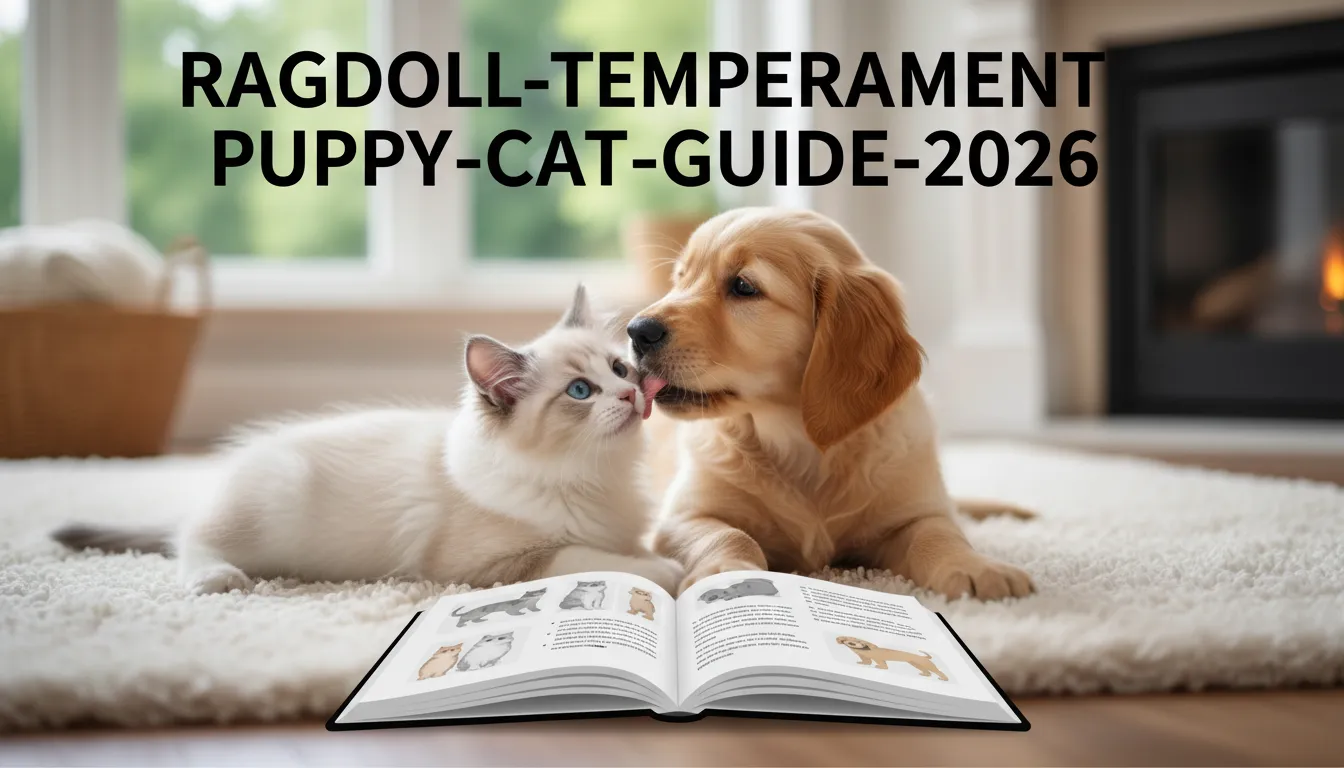
The Ragdoll temperament is defined by a unique combination of docile affection, low-intensity playfulness, and a famous tendency to go limp when held. Often called “puppy-cats,” these felines seek human proximity and exhibit a social, dog-like loyalty rarely seen in other breeds.
If you’re looking for a “floor ornament” or an independent loner, the Ragdoll is not it. These cats are socially needy and thrive on interaction.
The “Ragdoll Reality” at a Glance:
-
Affection Levels: Extreme; they are true “Velcro cats.”
-
Social Drive: High; they prefer to be in the same room as you.
-
Vocal Style: Quiet; they communicate through soft chirps and trills.
-
Adaptability: Exceptional; they generally welcome children and dogs.
Owning a Ragdoll is more like living with a perpetual toddler than a typical cat. From the way they “flop” into your arms to their habit of stalking you into the bathroom, their personality is centered entirely around human companionship.
Unlike more athletic breeds, a Ragdoll’s day-to-day life is a slow-motion pursuit of the next lap-cuddle or sun-drenched floor spot.
What is the Real Ragdoll Cat Temperament? (Quick Summary)
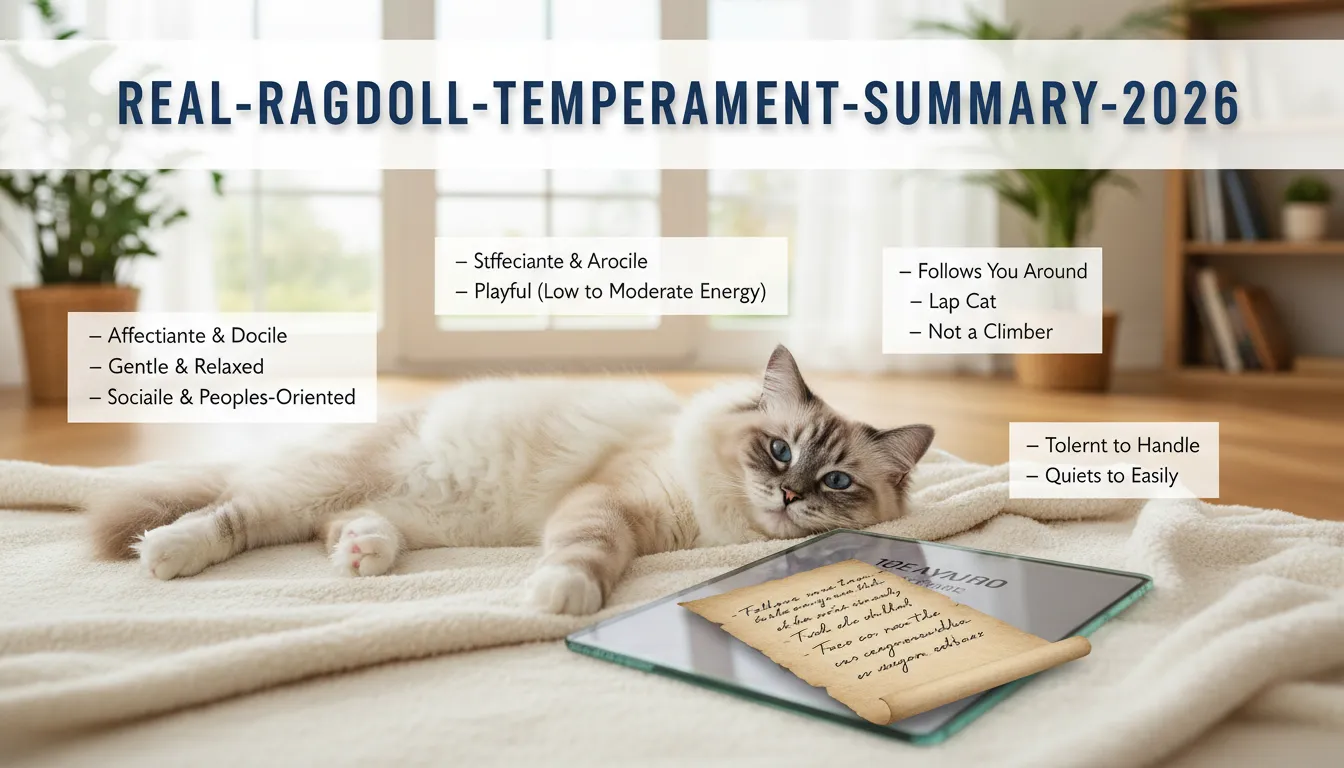
The Ragdoll temperament is a rare blend of extreme docility, high emotional intelligence, and a relaxed physical response to human touch. Unlike most felines, Ragdolls prioritize human social bonds over territorial independence, often acting more like a loyal canine than a traditional cat.
Ragdoll cats are famous for their docile, “puppy-like” temperament. Their primary personality traits include a lack of aggression, a strong desire for human proximity, and the “Ragdoll Flop”—a physiological relaxation response when held. They are notably quiet, indoor-oriented, and highly tolerant of children and other pets.
The “Floppy” Phenomenon: More Than Just a Cute Name
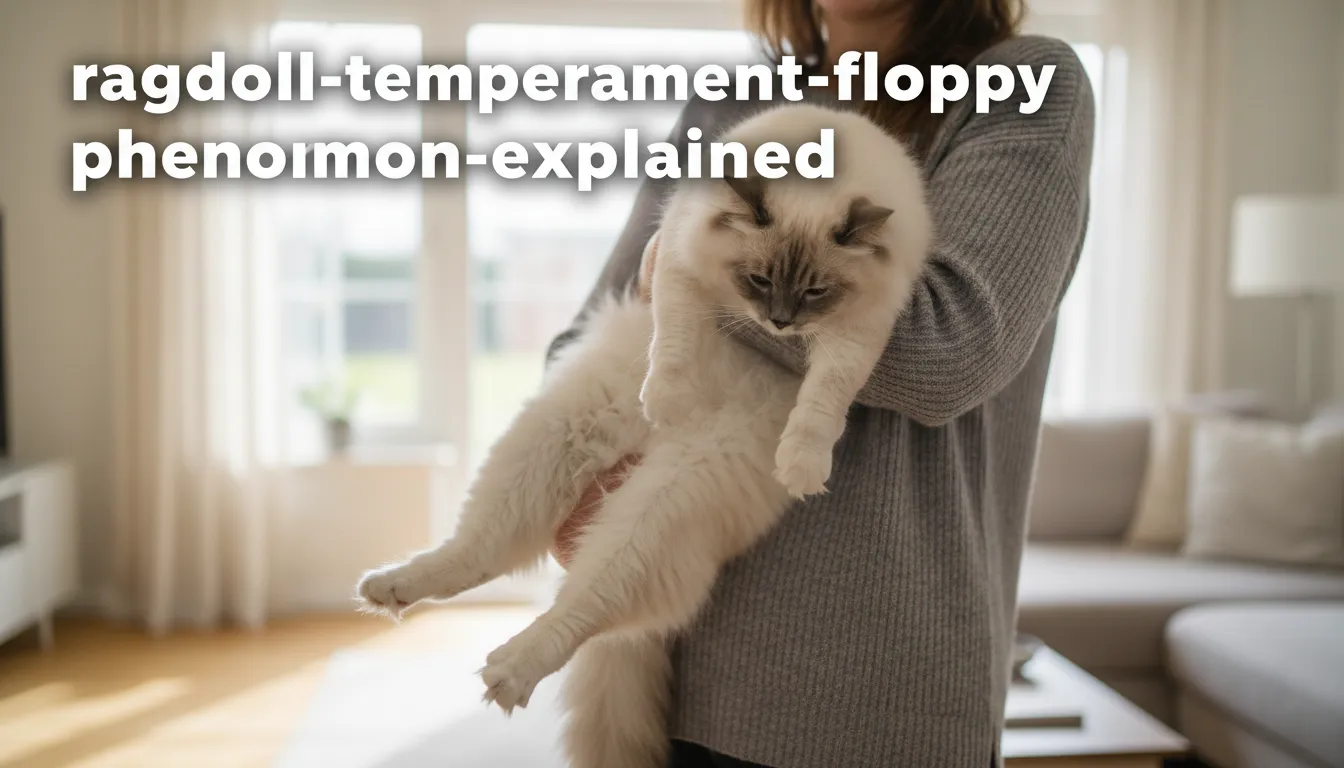
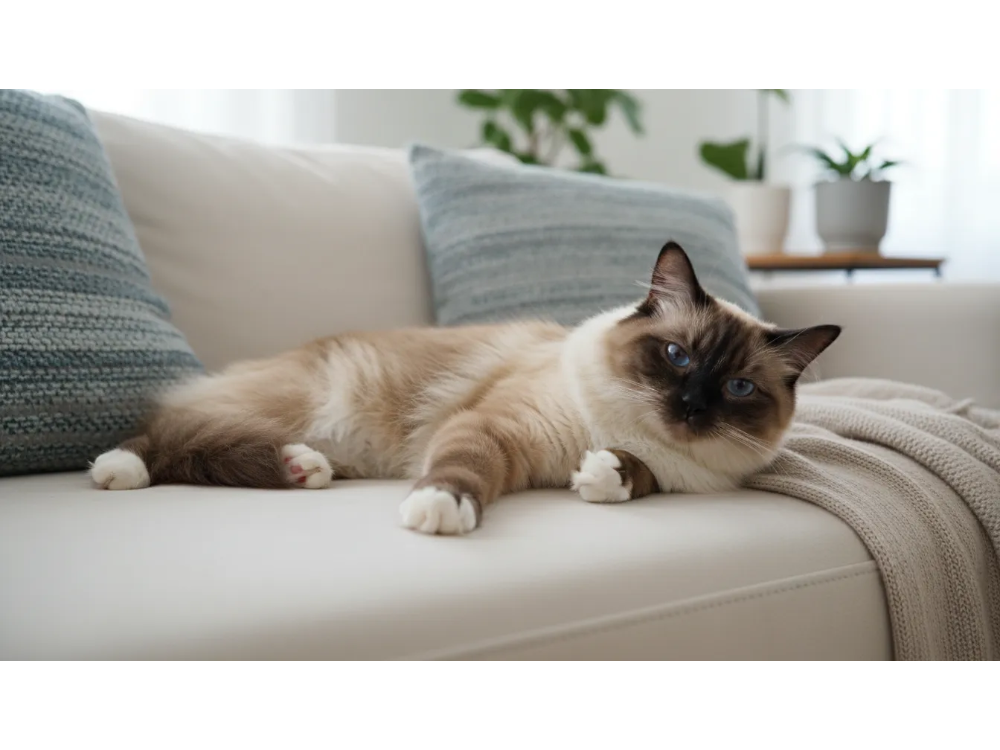
The hallmark of the breed is their ability to go completely limp in your arms. This isn’t just a quirk; it’s a biological trust signal that dates back to the breed’s origins with Ann Baker in the 1960s.
The Science of the “Ragdoll Flop”: Is it Genetic?
While some myths suggest Ragdolls feel less pain (which is dangerously false), the “flop” is actually a result of their extremely low-arousal threshold. Their nervous systems are hardwired for relaxation rather than a “fight-or-flight” response.
Pain Perception Myth: Why “Docile” Doesn’t Mean “Painless”
Expert Warning: One of the biggest dangers to a Ragdoll is the misconception that their calm nature means they are “tough.” Because of their stoic temperament, Ragdolls often hide physical distress or injury.
-
The Reality: They feel pain just like any other cat; they just don’t react with hissing or swatting.
-
Owner Tip: You must monitor their non-verbal cues (like hiding or lethargy) rather than waiting for a vocal cry.
5 Personality Secrets
Watch: Real-world demonstration of the Ragdoll “flop” and social personality traits.
Most breed profiles paint a picture of a perfect, easy-going cat. While Ragdolls are indeed sweet, their unique temperament comes with specific quirks that can surprise even experienced cat owners.
The “Velcro-Cat” Syndrome: Dealing with Separation Anxiety
Ragdolls don’t just “like” you; they are emotionally dependent on your presence. This breed is highly prone to separation anxiety. If you work 10+ hours a day and they are the only pet, they won’t just sleep—they will become lethargic and depressed.
-
The Fix: If you aren’t home often, a littermate bond or a calm dog is a biological necessity for this breed’s mental health.
The Ragdoll “Chirp”: Decoding Their Unique Vocalizations
Don’t expect a traditional meow. Ragdolls are famous for “silent meows” or bird-like chirps and trills.
-
Entity Insight: They use these sounds to announce their arrival in a room or to gently “demand” attention without being vocal pests. If your Ragdoll is screaming, something is seriously wrong.
The Clumsiness Factor: Why They Lack the “Righting Reflex”
Here is a secret most breeders gloss over: Ragdolls are notoriously uncoordinated. While most cats are “arboreal” (tree-dwelling), Ragdolls are “floor cats.” * The Safety Reality Check: They often lack the sharp righting reflex (the ability to land on their feet) because their bodies are heavy and their instincts are dulled.
-
Expert Tip: Never allow a Ragdoll to climb high, unsecured shelves. A fall that a Bengal would shrug off could seriously injure a “clumsy” Ragdoll.
Why Ragdolls Are “Street Unsmart”
A Ragdoll’s neophilic nature (love of the new) is their biggest weakness. They will approach a strange dog, a car, or an unfriendly stranger with the same “floppy” trust they show you.
-
The Warning: Their lack of predatory drive and survival instinct makes them easy targets. They are strictly indoor-only cats for their own safety.
Is the Ragdoll Temperament Right for Your Household?
Choosing a cat based on looks is a mistake; choosing based on compatibility is a strategy. The Ragdoll’s low-aggression temperament makes them a specialized fit for specific home dynamics.
Ragdolls and Children: The “No-Claw” Tolerance Reality
Ragdolls are arguably the most child-friendly breed in existence. Their high tolerance threshold means they rarely resort to biting or scratching when handled awkwardly.
-
The “Ragdoll Limit”: While they are patient, they are also heavy. Ensure children don’t carry them like a “sack of potatoes,” as their lack of a stiff muscular structure makes their spine more vulnerable to injury.
The “Puppy-Cat” with Real Dogs: A Social Blueprint
Because of their low prey drive, Ragdolls don’t trigger the “chase” instinct in dogs as easily as skittish cats do.
-
The Neophilic Advantage: A Ragdoll is more likely to sniff a dog’s nose than hiss at it.
-
Pro Tip: They pair best with Golden Retrievers, Labradors, or other “soft-mouthed” breeds that match their gentle energy.
The WFH Companion: The 8-Hour Loneliness Limit
If you work from home, the Ragdoll is your perfect “shadow.” They will sit on your keyboard, lean against your leg during Zoom calls, and provide silent emotional support.
-
Can they be left alone? No more than 4-6 hours. Beyond that, their “Velcro” nature turns into stress. If your job requires long office hours, you must provide a companion—be it another cat or a pet-friendly sitter.
Developmental Stages: How Temperament Shifts from 0 to 4 Years
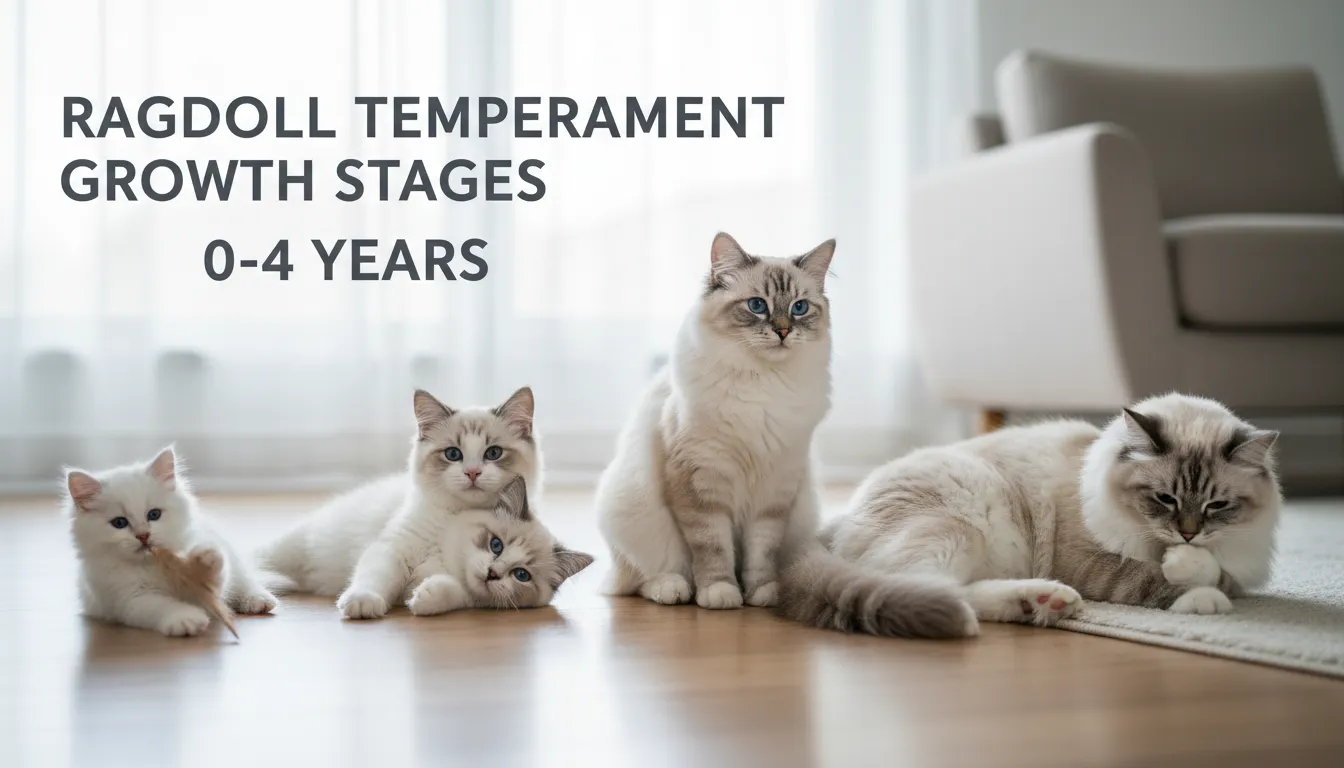
A common mistake is thinking a 12-week-old kitten represents the final temperament. Ragdolls are a slow-maturing breed, taking up to four years to reach “peak Zen.”
| Stage | Temperament Expectation | Energy Level |
| Kitten (0-1yr) | High curiosity, “zoomies,” testing boundaries. | 8/10 |
| Adolescent (1-3yrs) | The “Teenage” phase; testing the “flop” limits, more vocal. | 6/10 |
| Adult (4yrs+) | Full maturity; maximum “floppiness,” predictable routines. | 3/10 |
The “Zoomie” Phase: Adolescent Energy Levels
Between years 1 and 2, your Ragdoll might act “un-Ragdoll-like.” They may climb curtains or race through hallways. This is normal musculoskeletal development. Don’t worry—the “lazy” temperament will settle in as they gain their full 15–20lb weight.
Reaching the “Zen” State: Maturity at Age 4
By age 4, the Ragdoll personality fully crystallizes. This is when they become the “floor-rugs” they are famous for, showing maximum trust and the most consistent emotional stability.
Managing the “Dark Side” of a Sweet Personality
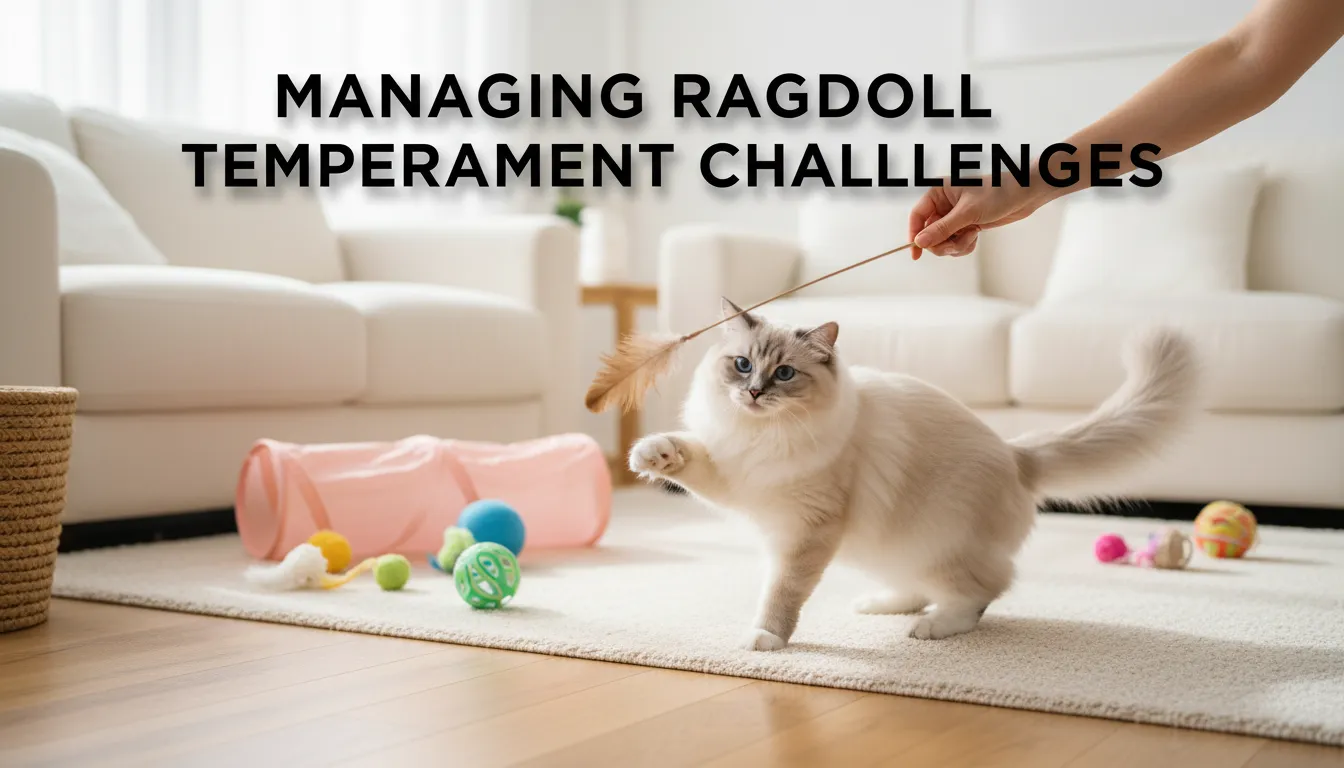
Having a “perfectly chill” cat isn’t always easy. A Ragdoll’s extreme docility can lead to specific behavioral challenges that owners often mistake for “good behavior.”
A Ragdoll that doesn’t move is at risk for joint stress and heart issues like Hypertrophic cardiomyopathy (HCM).
Preventing “Floor-Mat” Lethargy
Because Ragdolls are low-energy, they are highly prone to obesity. Their “zen” temperament means they won’t demand exercise like a Bengal.
-
The Weight Trap: Their plush coat hides fat easily. A Ragdoll that doesn’t move is at risk for joint stress and heart issues (HCM).
-
The Solution: You must initiate “forced play” for 15 minutes a day using wand toys or puzzle feeders to keep their metabolism active.
Training the “Untrainable”: Using Neophilia to Teach Fetch
Ragdolls are surprisingly intelligent and food-motivated. Their desire for human praise makes them easier to train than most breeds.
-
Expert Secret: Use their neophilia (love of new things). They can be taught to “sit,” “stay,” or even walk on a leash. Many Ragdolls naturally enjoy fetching small crinkle balls—a trait that reinforces their “puppy-cat” reputation.
Frequently Asked Questions About Ragdoll Personality
Q1: Are Ragdolls mean to other cats?
No. Their low-dominance temperament makes them one of the least aggressive breeds. They rarely fight for “Alpha” status and usually prefer to submit or walk away rather than engage in a territorial scrap.
Q2: Do all Ragdolls actually flop?
While it is a breed standard, not every individual will “flop” on command. It requires a high level of environmental trust. If your Ragdoll isn’t flopping, they may still be adjusting to their surroundings or have a more “independent” streak.
Q3: Why does my Ragdoll follow me to the bathroom?
This is the ultimate sign of Ragdoll loyalty. Because they lack a strong sense of personal space, they view any “closed door” as a barrier to their social bond. It’s not a behavioral problem; it’s a temperament trait.
Q4: Are they hypoallergenic?
No. While they lack an undercoat (which reduces shedding and mats), they still produce the Fel d 1 protein in their saliva and skin. Their gentle nature doesn’t change the biology of allergies.
Final Verdict: Is the Ragdoll Your Perfect Match?
The Ragdoll temperament is a masterpiece of feline evolution for those who want a companion, not just a pet. If you can provide a safe indoor environment, handle a “velcro” personality, and manage their social needs, you will be rewarded with a level of unconditional love rarely found in the animal kingdom.