Ragdoll Cat Personality: The Complete Guide to Living with a “Puppy-Cat”
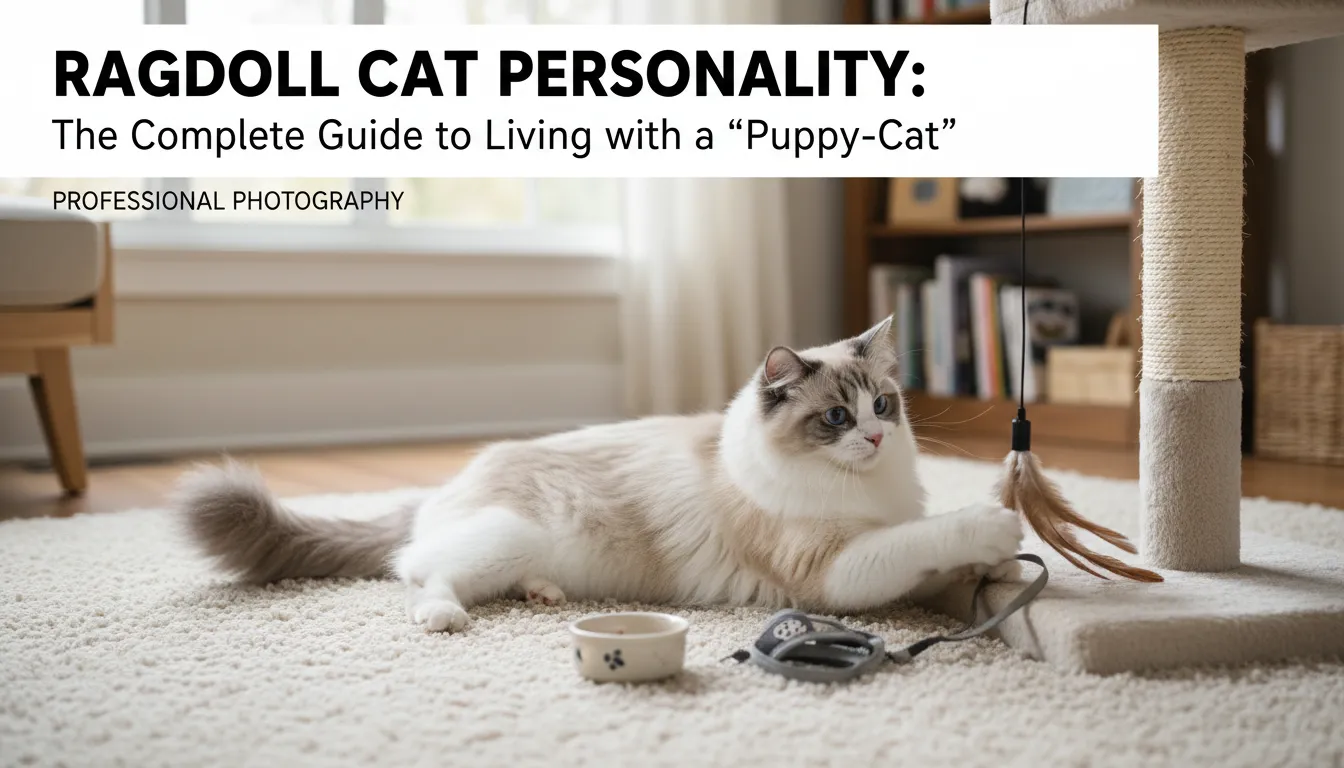
The Ragdoll cat personality is often described as “dog-like,” but that barely scratches the surface. These gentle giants are famous for their neoteny—a biological trait where they retain kitten-like behaviors throughout their adult lives.
If you are looking for a cat that acts as a social shadow, the Ragdoll is your perfect match. However, there is a specific reality to living with these “floppy” felines that most generic guides skip.
The Ragdoll Personality “Quick Answer”
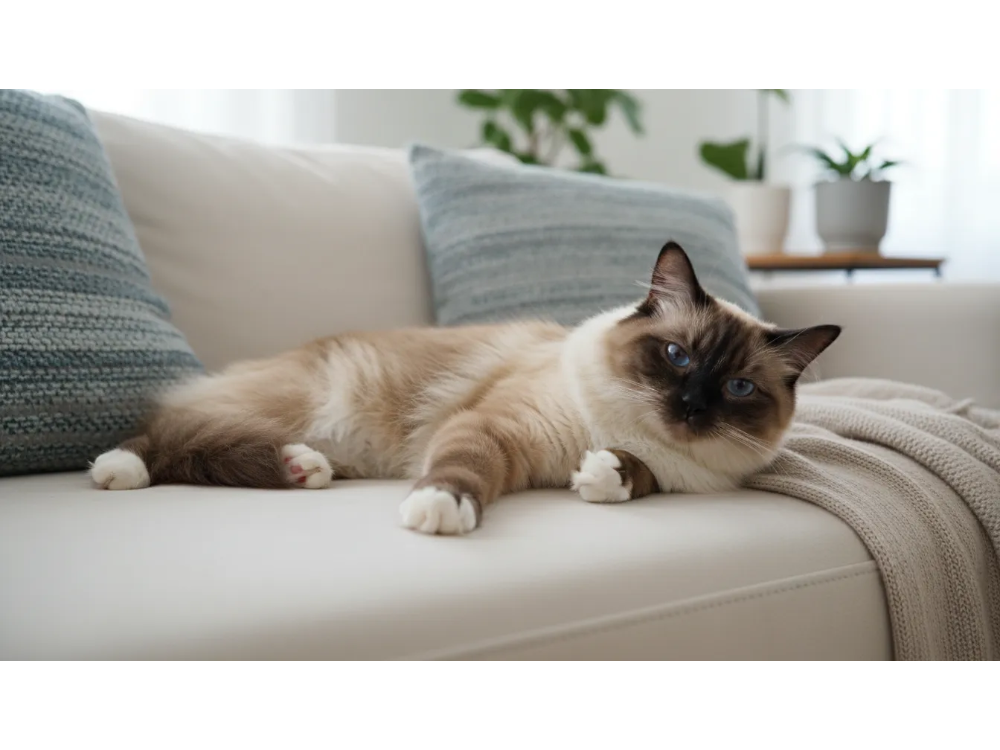
The Ragdoll cat personality is defined by a docile, affectionate, and social temperament. Known as “Puppy-cats,” they actively seek human companionship, often following owners from room to room. Their most famous trait is going limp (flopping) when held, a sign of extreme trust and low muscular tension. Unlike independent breeds, Ragdolls have high social needs and prefer indoor environments with frequent interaction.
Why Owners Call Them “The Velcro Breed”:
-
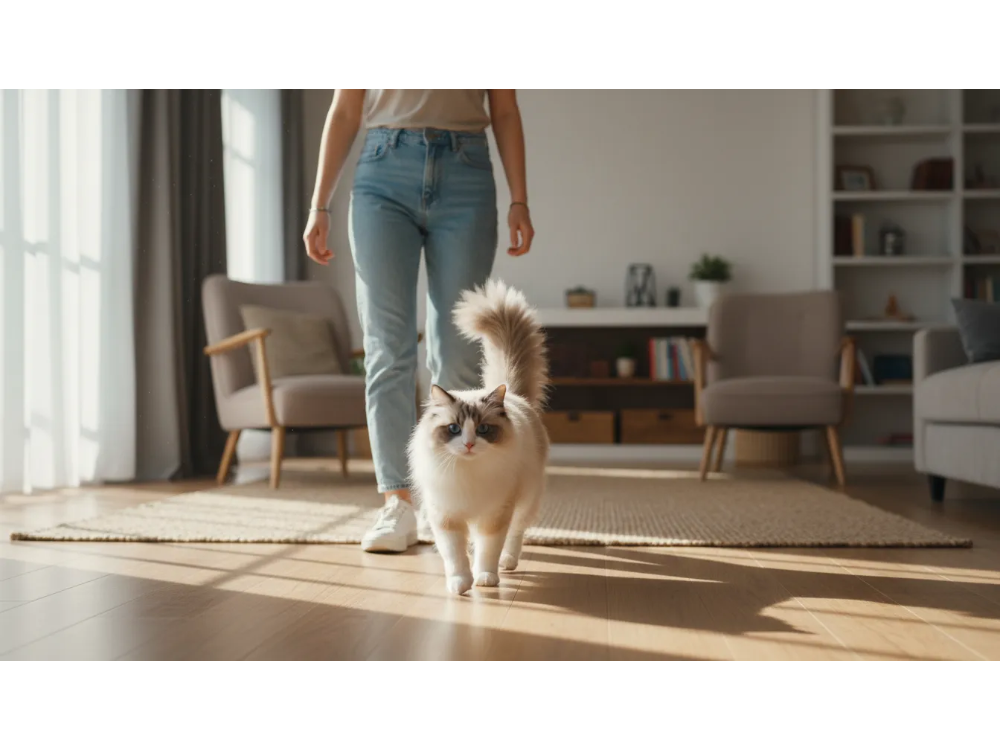
The Follower: They don’t just “tolerate” you; they want to be involved in your daily chores.
-
The Greeter: Expect your Ragdoll to meet you at the door after a long day.
-
The Soft Vocalizer: They rarely yell. Instead, they communicate with small chirps and gentle trills.
-
Low Prey Drive: They are generally more interested in a plush toy than hunting a mouse.
The “Ragdoll” Reality: Why They Actually Go Limp
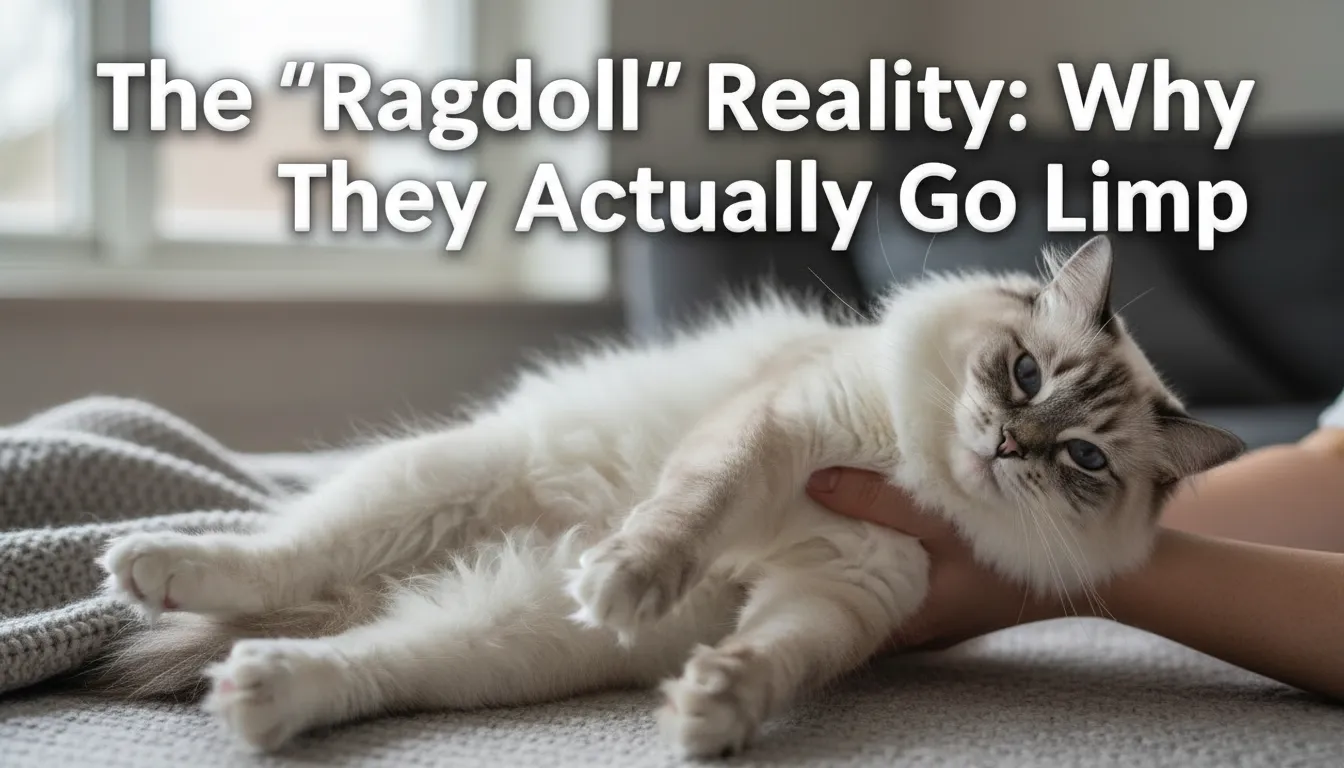
Many people think the “flop” is just a cute trick. In reality, it is a fascinating biological and behavioral trait. When a Ragdoll cat feels safe, they undergo a total relaxation of their muscular system. This is a deep sign of trust and security.
The Science of Neoteny and Feline Docility
Why do Ragdolls act so differently from the “aloof” cats we see in movies? The answer is neoteny.
-
Juvenile Traits: Ragdolls are specifically bred to keep their kitten-like personality.
-
Low Aggression: This breeding minimizes the “fight or flight” response, resulting in a docile temperament.
-
The “Flop” Gene: While not a single gene, their parasympathetic nervous system is highly responsive. When picked up by someone they trust, they effectively “turn off” their muscle tension.
Pro-Tip: Not every Ragdoll is a “flopper.” About 20% of Ragdolls may be more reserved. If yours doesn’t go limp immediately, it usually means they need more trust-building or have a slightly more independent streak.
Key Behavioral Takeaways:
-
Floor Dwellers: Unlike many cats, Ragdolls often prefer staying at ground level. They aren’t big “jumpers” or “counter-surfers.”
-
Trusting Nature: They assume everyone is a friend. This is why they are strictly indoor-only cats.
-
Soft-Bodied: Their lack of tension makes them feel heavier and “doughier” than other breeds of the same weight.
The “Velcro” Factor: Living with a High-Dependency Breed

If you value your privacy, a Ragdoll cat might surprise you. These cats don’t just like you; they are emotionally dependent on your presence. This “Velcro” behavior is a core part of the Ragdoll cat personality.
Why Your Ragdoll Follows You to the Bathroom (Separation Anxiety)
Does your cat sit outside the door crying when you shower? That isn’t just curiosity. Because Ragdolls are socially motivated, they view themselves as part of your “pack.”
-
The Social Shadow: They will follow you from the kitchen to the home office just to sit on your feet.
-
Low Independence: Unlike “stray-type” breeds, Ragdolls lack a strong sense of solo-survival. They look to you for security and entertainment.
-
The “Work-from-Home” Hero: This breed is the ultimate companion for remote workers, but they struggle in empty houses.
Insider Advice: If you work 8-10 hours away from home, a single Ragdoll may become depressed or destructive. To fix this “content gap,” experts recommend adopting a pair or ensuring they have interactive puzzle feeders to occupy their minds while you are gone.
Signs of a “Velcro” Ragdoll:
-
Paw-Patting: They will gently tap you for attention rather than meowing loudly.
-
Sleeping Habits: They prefer to sleep on or next to you, often stretching out to maintain physical contact.
-
The “Door Greeting”: Like a Golden Retriever, they will wait by the door for your return.
Male vs. Female Ragdolls: Choosing the Right “Social Shadow”
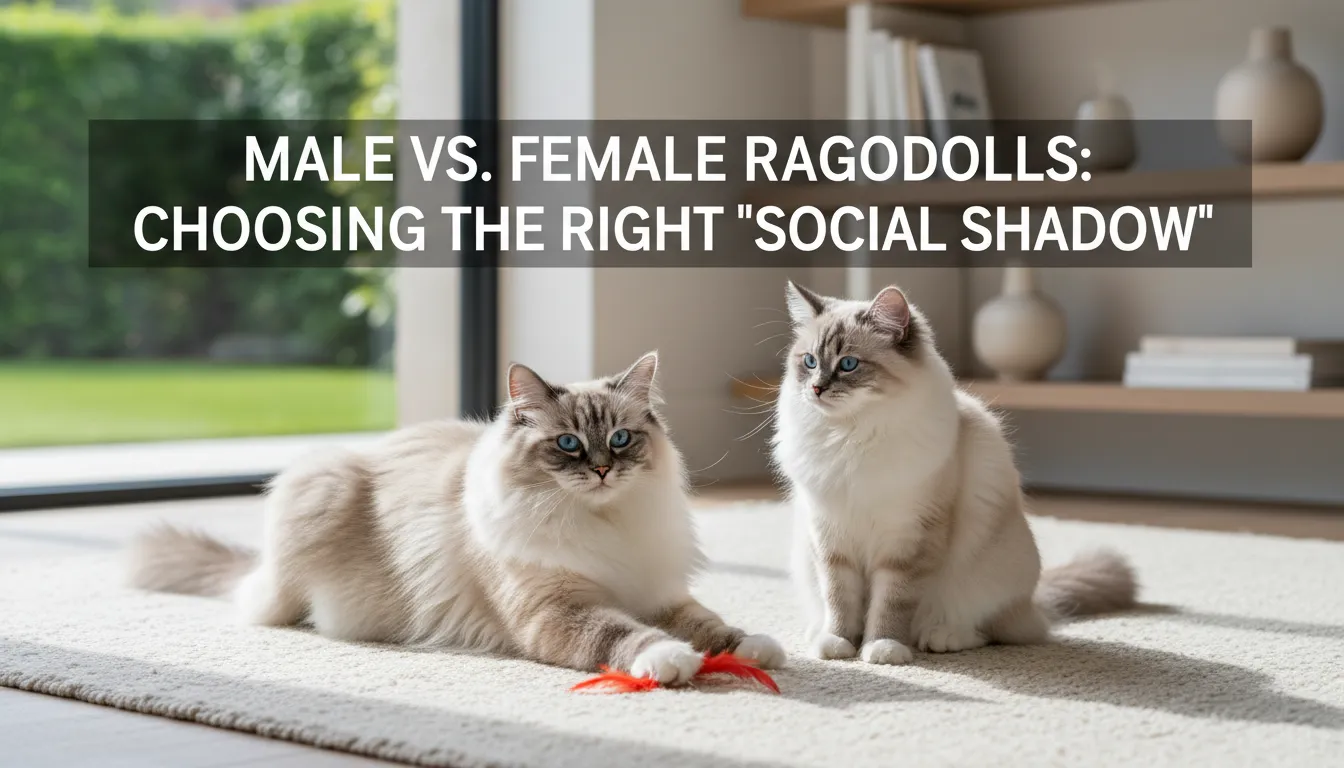
When looking at the Ragdoll cat personality, most people assume they are all identical “lap-hogs.” However, there is a distinct gender divide that can impact your daily life. Understanding these nuances is the ultimate pro-secret for potential owners.
-
The “Social Shadow” (Males):
-
Males are typically the quintessential “lap-seekers.” * They tend to be more “goofy” and persistent in their quest for cuddles.
-
Expect a 20lb male to try and squeeze onto your lap while you’re typing.
-
-
The “Graceful Observer” (Females):
-
Females often display a “near-seeker” personality.
-
They love you deeply but prefer to sit near you rather than directly on you.
-
They are often more “managerial,” watching over the household from a nearby chair.
-
Expert Comparison Table: Gender Personalities | Trait | Male Ragdolls | Female Ragdolls | | :— | :— | :— | | Affection Style | Intrusive/Clingy | Gentle/Observant | | Playfulness | High (Clumsy) | Medium (Calculated) | | Independence | Very Low | Moderate |
Which one should you choose? If you want a total “Velcro” cat that never leaves your side, a male is often the winner. If you want the Ragdoll sweetness but prefer a cat that gives you a little personal space, a female is the better match.
The Stoic Health Trap: The Dark Side of a “Chill” Personality

This is the most critical Safety Gap missing from competitor content. Because the Ragdoll cat personality is so incredibly docile, they have a dangerous trait: they are stoic.
Why Their Docility Can Be Dangerous (Safety Alert)
In the wild, showing pain is a death sentence. Ragdolls have taken this to the extreme. Because they are so low-energy and calm, owners often mistake “being sick” for “being chill.”
-
The Silent Crisis: A Ragdoll may have a serious urinary blockage or heart issue and will still purr if you pet them.
-
The “Purr” Deception: Cats often purr to self-soothe when in pain.
Silent Distress Signals: Spotting Pain in a Non-Vocal Cat
Since they rarely meow in distress, look for these subtle behavior shifts:
-
The “Meatloaf” Hunch: Sitting tightly tucked up instead of their usual “flop.”
-
Hiding: A social Ragdoll that suddenly hides under the bed is an emergency.
-
Litter Box Changes: Straining or vocalizing in the box (a sign of painful bladder stones).
The Stoic Health Trap: The Dark Side of a “Chill” Personality

This is the most critical safety information missing from standard breed guides. Because the Ragdoll cat personality is so incredibly docile, they possess a dangerous trait: they are masters of hiding pain. #### Why Their Docility Can Be Dangerous (Safety Alert) In the animal kingdom, showing weakness is a liability. Ragdolls have retained this instinct to an extreme degree. Because they are naturally low-energy and calm, many owners mistake “being sick” for simply “being a chill Ragdoll.”
-
The Silent Crisis: A Ragdoll may have a serious medical issue, such as a urinary blockage, and still purr when you pet them.
-
The “Purr” Deception: Research shows cats often purr to self-soothe during physical distress. Never assume a purring Ragdoll is a healthy Ragdoll if their behavior has shifted.
Silent Distress Signals: Spotting Pain in a Non-Vocal Cat
Since this breed rarely meows in distress, you must look for these subtle behavioral shifts:
-
The “Meatloaf” Hunch: Instead of their usual relaxed “flop,” a cat in pain will sit tightly tucked up, often with their head low and eyes squinted.
-
Sudden Hiding: A social “Velcro” cat that suddenly spends all day under the bed or in a dark closet is a red flag.
-
Litter Box Vocalization: While usually quiet, a Ragdoll might let out a sharp cry while using the box—this is an immediate sign of painful bladder stones or crystals.
-
Change in “Floppiness”: If your cat feels stiff or resists being picked up, they likely have joint pain or abdominal discomfort.
Pro-Tip: Because Ragdolls are prone to Hypertrophic Cardiomyopathy (HCM), any sign of lethargy that goes beyond their normal “lazy” baseline should be discussed with a vet immediately.
The 3:00 AM “Freight Train”: Managing High-Energy Zoomies
Don’t let the “lazy” label fool you. While the Ragdoll cat personality is generally calm, they are subject to Frenetic Random Activity Periods (FRAPs)—better known as the “zoomies.”
Because an adult Ragdoll can weigh up to 20 pounds, a zoomie session feels less like a cat and more like a freight train racing through your hallway. This is the reality of living with a large, muscular “puppy-cat.”
-
Crepuscular Rhythms: As natural hunters, Ragdolls are most active at dawn and dusk. This is why they often get a burst of energy right when you are trying to sleep.
-
The “Post-Box” Sprint: Many owners report “triumphant laps” after a cat uses the litter box. This is a quirky but common breed trait caused by a vagus nerve response.
-
Vocal Play: Surprisingly, some Ragdolls growl or chirp during heavy play. This isn’t aggression; it is a sign of high excitement and “puppy-like” vocalization.
Pro-Tip for Quiet Nights: To prevent the 3:00 AM sprint, schedule an intense 15-minute play session right before your own bedtime. Follow it with a small meal. This mimics the natural “Hunt-Eat-Groom-Sleep” cycle, ensuring they settle down when you do.
Key Behavioral Entities:
-
Floor-Level Play: Ragdolls rarely climb curtains; they prefer chasing toys across the floor.
-
Tactile Sensitivity: They love soft-textured toys that mimic the feel of their own silky fur.
-
Weight Management: Keeping them active during these zoomies is vital to prevent feline obesity.
Pro-Insider Advice: 3 Secrets to Training a Ragdoll
Ragdolls are highly intelligent and, unlike many other breeds, they are eager to please. You can use their social nature to teach them tricks that will amaze your friends. Because they view you as their “leader,” they are much easier to motivate than the average house cat.
-
The “Fetch” Entity: Many Ragdolls naturally retrieve toys. Use a soft plush toy (their favorite) and reward them with a high-value treat every time they bring it back. This reinforces their “puppy-cat” instincts.
-
Clicker Training: Because they are extremely food-motivated, Ragdolls respond exceptionally well to clickers. You can easily teach them to “sit,” “stay,” or even “high-five” within a few weeks.
-
Harness Training: Since they are indoor-only cats due to their trusting nature, harness training allows them to explore the outdoors safely. Their calm demeanor makes them one of the easiest breeds to get used to a leash and harness.
Insider Tip: Always keep training sessions short (under 5 minutes). A Ragdoll’s attention span is linked to their stomach—once the treats stop, the “lesson” is over!
Are You a Match? (The Compatibility Checklist)
Before you commit, use this quick checklist to see if your lifestyle fits the Ragdoll cat personality. This is the final “reality check” to ensure a happy home for both of you.
-
[ ] Can you handle a “Shadow”? They will be under your feet constantly, even in the kitchen or bathroom.
-
[ ] Are you home often? They shouldn’t be left alone for more than 4–6 hours without a feline companion.
-
[ ] Do you mind “Floor Cats”? If you want a cat that perches on high refrigerators or curtains, this isn’t the breed for you.
-
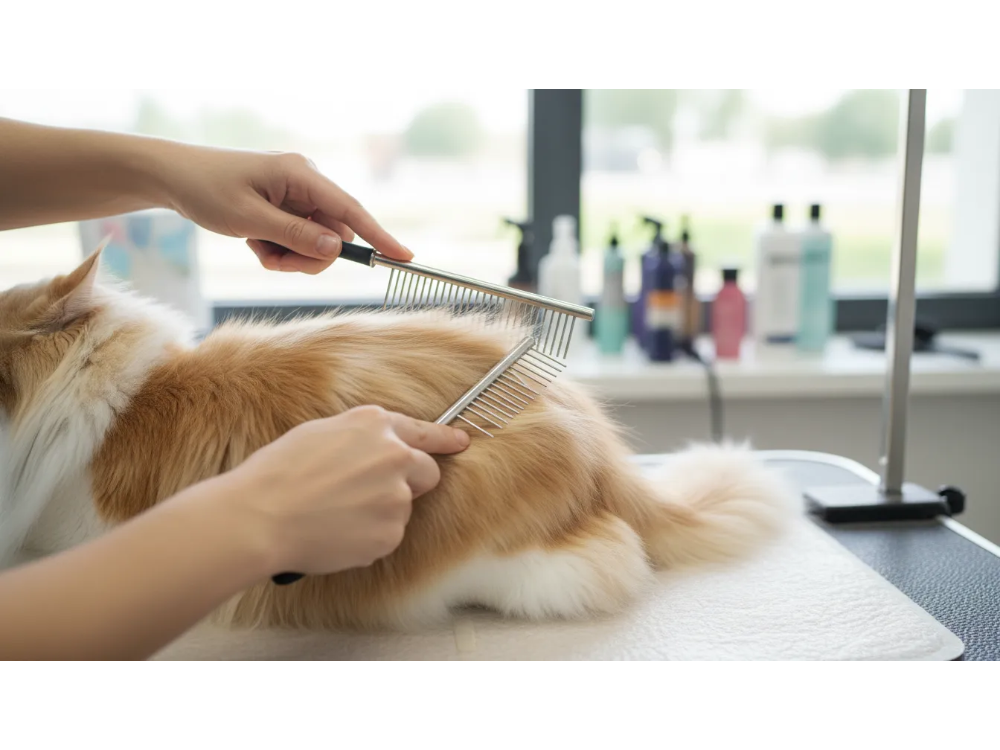
[ ] Are you okay with grooming? Their single-layer coat doesn’t mat easily, but they still need a thorough brushing twice a week to manage shedding.
-
[ ] Do you have a “Safe” Home? Because they lack a strong “fight” instinct, they must be protected from aggressive dogs or outdoor hazards.
People Also Asked
Q1: Are Ragdolls actually “dumb” because they are so calm?
Answer: Absolutely not. Ragdolls are highly intelligent and rank high in “social intelligence.” Their calm nature is often mistaken for a lack of awareness, but they are actually very observant. Because they are so food-motivated and eager to please, they are much easier to train than “smarter,” more independent breeds like the Siamese.
Q2: Do Ragdoll cats ever get aggressive?
Answer: It is extremely rare for a Ragdoll to show unprovoked aggression. However, they can become defensive if they are in unrecognized pain (due to their stoic nature) or if they are severely overstimulated. If a Ragdoll hisses or scratches, it is usually a sign that their personal space has been ignored for too long or they have an underlying medical issue.
Q3: Can Ragdolls be left alone for 8 hours while I work?
Answer: While a mature Ragdoll can handle a workday, they are prone to separation anxiety. They thrive on companionship and may become depressed or destructive (like scratching furniture) if left alone daily without stimulation. If you work long hours, it is highly recommended to have a second pet or a variety of interactive puzzle toys to keep them occupied.
Q4: Why does my Ragdoll not “flop” when I hold them?
Answer: Not every Ragdoll has the “floppy gene” immediately. “Flopping” is a sign of complete relaxation and trust. If your cat is young, they may be too energetic to settle down. If they are older, it may take more time to build a bond where they feel safe enough to let go of their muscle tension. Ensure you are supporting their heavy hindquarters, as feeling “unstable” will prevent them from going limp.
Q5: Are Ragdoll cats vocal?
Answer: Generally, no. Ragdolls are known for having soft, melodic voices. They rarely “yell” for food. Instead, they use small chirps, trills, and gentle “meeps” to communicate. If your Ragdoll suddenly becomes very vocal or loud, it is often a sign of distress or a change in their environment.
Conclusion: The Ragdoll Verdict
The Ragdoll cat personality is a unique blend of canine loyalty and feline grace. They aren’t just “pets”; they are roommates that will follow you, greet you, and offer a level of affection rarely seen in the cat world. As long as you can provide the social interaction they crave and stay vigilant about their health, a Ragdoll will be the most rewarding companion you’ve ever owned.