Ragdoll Cat Colors: The Ultimate 2026 Identification Guide
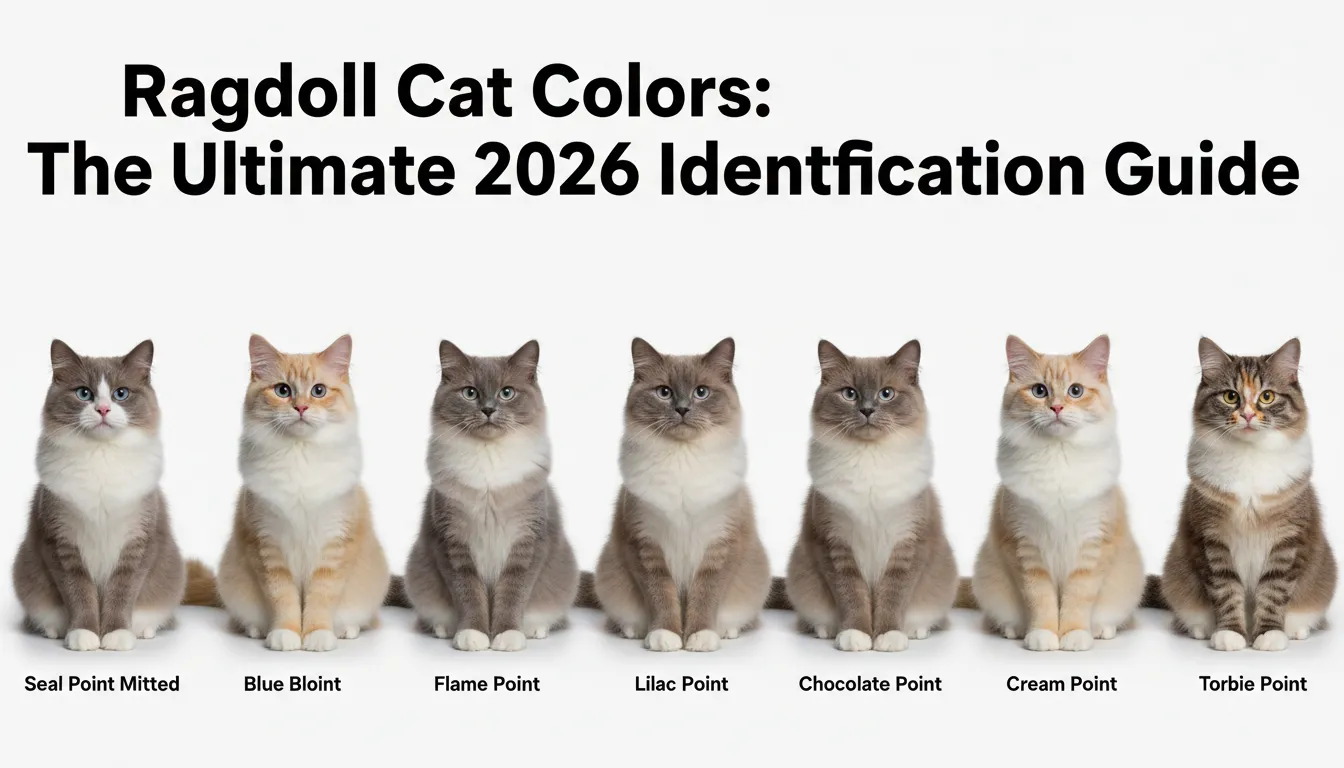
Identifying Ragdoll cat colors is notoriously difficult because every traditional kitten is born pure white. You can only accurately determine their final look by checking specific phenotype identifiers like nose leather, paw pads, and the “bloom” of their points over a 4-year development timeline.
Why Your Ragdoll’s Color is a “Genetic Mystery”
Most owners feel scammed when their “Lilac” kitten turns “Blue” or their “Chocolate” point looks like a “Seal.” This happens because Ragdolls possess temperature-sensitive albinism caused by the Tyrosinase enzyme.
Here is what you need to know about their color evolution:
-
The Heat-Sensitive Secret: Color only develops on the “points” (ears, tail, and face) because those areas are cooler than the cat’s core body temperature.
-
The 2-Week Window: While ghost markings appear early, a true Seal Point or Blue Point only becomes distinct after the first 14 days.
-
The 2026 Standard: Under the latest TICA and CFA guidelines, identifying “Traditional” vs. “Cherubim” (Mink/Sepia) variants is now the first step in verifying your cat’s pedigree.
Expert Note: If you are looking at a “Solid” or “Cinnamon” cat with green eyes, it is a beautiful feline, but it does not meet the traditional breed standard. True Ragdolls must have blue eyes and a pointed coat.
What Are the Most Common Ragdoll Cat Colors?
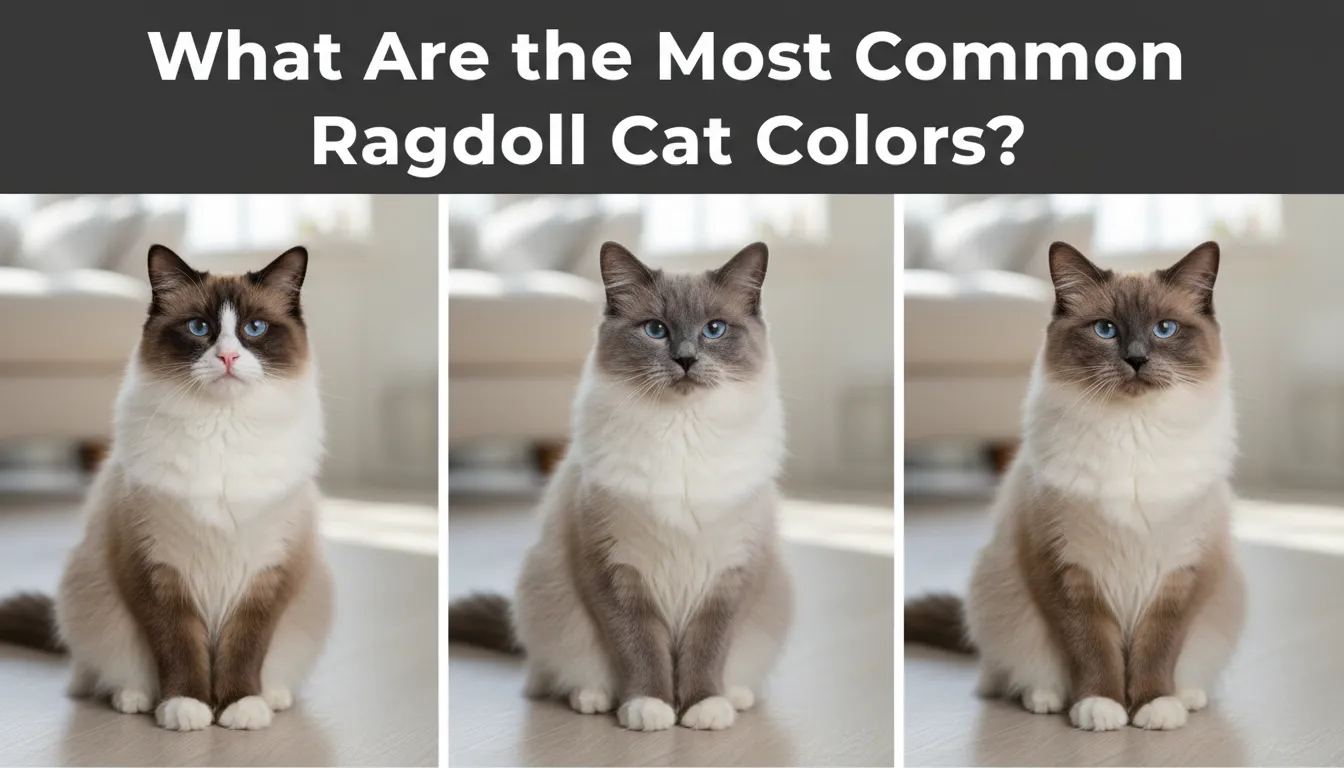
The six traditional Ragdoll cat colors are Seal, Blue, Chocolate, Lilac, Red (Flame), and Cream. These shades are categorized into “Dense” and “Dilute” versions of the same genetic base. To identify your cat, you must look at the Nose Leather and Paw Pads, as coat color often “ghosts” or lightens depending on the season.
| Base Color | Dense Version | Dilute Version (Lighter) |
| Black Base | Seal: Deep, dark brown | Blue: Cool, steel-gray |
| Brown Base | Chocolate: Warm milk-brown | Lilac: Warm, pinkish-gray |
| Red Base | Red: Bright apricot/orange | Cream: Pale, buff-yellow |
The Science of the “Bloom”: Why Ragdolls Are Born White
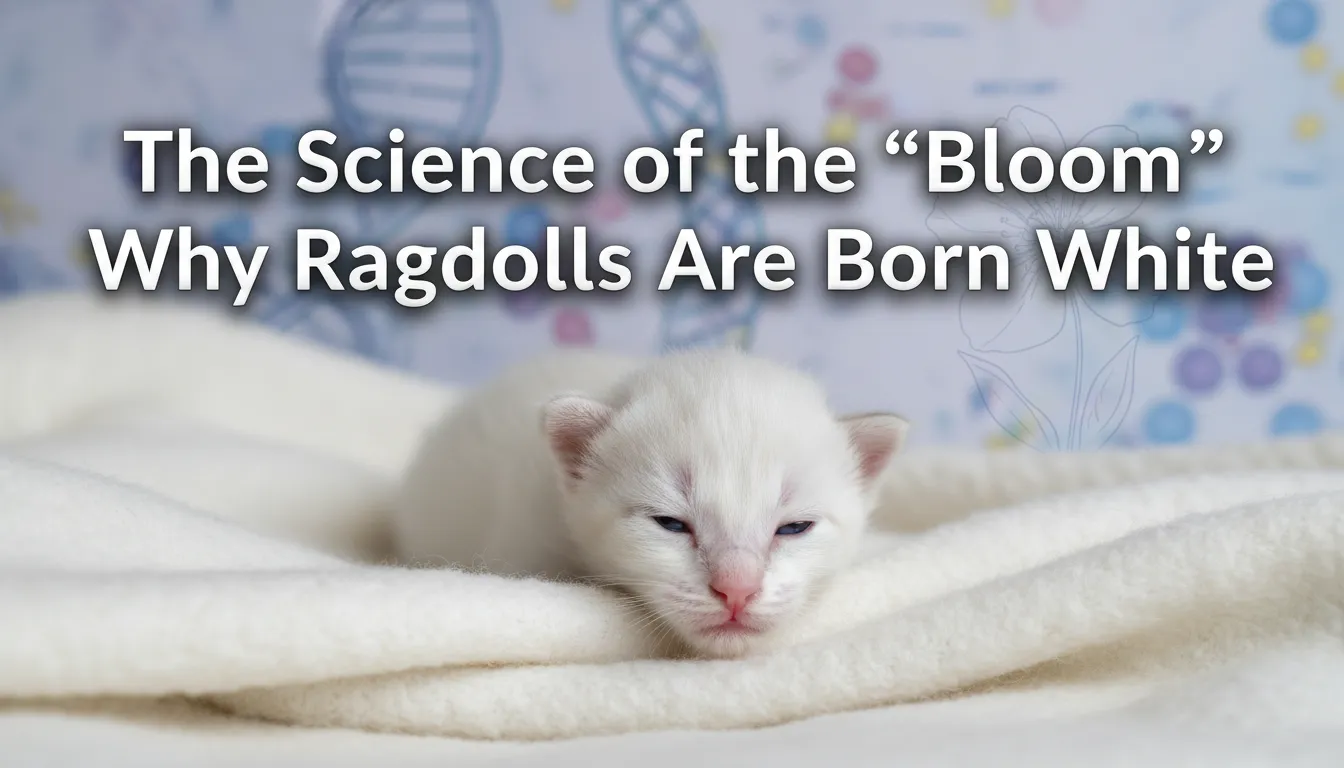
Every traditional Ragdoll kitten enters the world as a blank canvas. This is because they carry the Himalayan Gene, a form of temperature-sensitive albinism.
The Tyrosinase Enzyme & Nuchal Temperature
Inside the mother’s womb, the temperature is a constant, warm environment. This heat deactivates the Tyrosinase enzyme, which is responsible for producing melanin (pigment).
-
The Cooling Effect: Once born, the kitten’s extremities (ears, tail, nose, and paws) become slightly cooler than the core body.
-
The Color Trigger: This drop in nuchal temperature “turns on” the enzyme, allowing color to slowly bloom on the colder parts of the body.
-
Senior Darkening: As Ragdolls age, their circulation slows down and their body temperature drops slightly, causing their overall coat to darken significantly over time.
Pro Tip: If your Ragdoll lives in a very cold climate, you may notice their “Saddle” (the color on their back) becomes much darker than a Ragdoll living in a tropical environment.
Detailed Breakdown of Traditional Ragdoll Colors (CFA & TICA Standards)
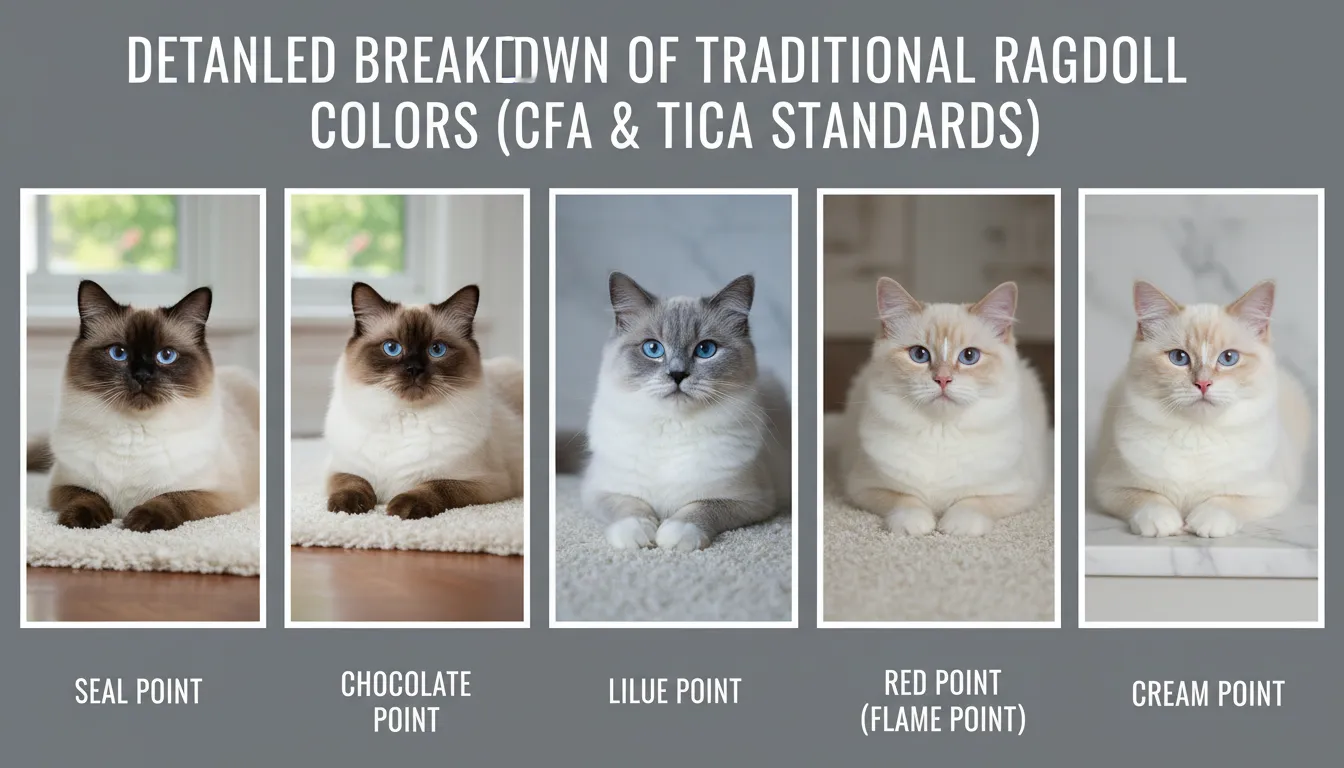
Identifying the difference between “Dense” and “Dilute” colors is where most pet owners get confused. To be 100% sure of your cat’s color, you must look past the fur and examine the Nose Leather and Paw Pads.
Seal Point vs. Chocolate Point: The “Nose Leather” Test
These two are the most commonly misidentified. While both are brown, their “temperature” is different.
-
Seal Point: This is a Dense color. Think of a deep, dark espresso or a “Seal” skin.
-
Nose/Pads: Must be a dark, rich Seal Brown.
-
-
Chocolate Point: This is the rarer, warmer version. Think of warm milk chocolate or cocoa powder.
-
Nose/Pads: These will have Cinnamon-Pink undertones. If the nose looks “cold” or black, it is likely a Seal, not a Chocolate.
-
Blue Point vs. Lilac Point: Identifying the “Pinkish Gray” Hue
This is the “Expert Level” of identification. Both appear gray to the untrained eye, but the undertones tell the truth.
-
Blue Point: The most popular “gray” Ragdoll. It is a Dilute of Seal.
-
Visual Check: The coat is a cold, slate gray with a bluish cast.
-
Nose/Pads: Dark Slate Gray.
-
-
Lilac Point: A Dilute of Chocolate and extremely rare.
-
Visual Check: The points look like frosty lavender or a very pale, warm dove-gray.
-
Nose/Pads: These must be Lavender-Pink. If there is any blue or slate tone, it is not a true Lilac.
-
Red (Flame) and Cream Points: The X-Linked Genetic Mystery
Red-based Ragdolls are unique because their color is linked to the X chromosome.
-
Red (Flame) Point: Bright apricot to deep orange points. Most Red Ragdolls are male because they only need one “O” gene from their mother to show the color.
-
Cream Point: The Dilute version of Red. It looks like a soft, pale buff or “peachy” white.
Rare Colors: Cinnamon and Fawn (The Breeder’s Jargon)
While you may see Cinnamon (reddish-brown) or Fawn (beige) advertised, these are typically found in Non-Traditional lines. Most major show associations (CFA) do not yet recognize these as “Standard,” but they are growing in popularity among “Designer” breeders.
The 4 Essential Ragdoll Patterns You Must Know
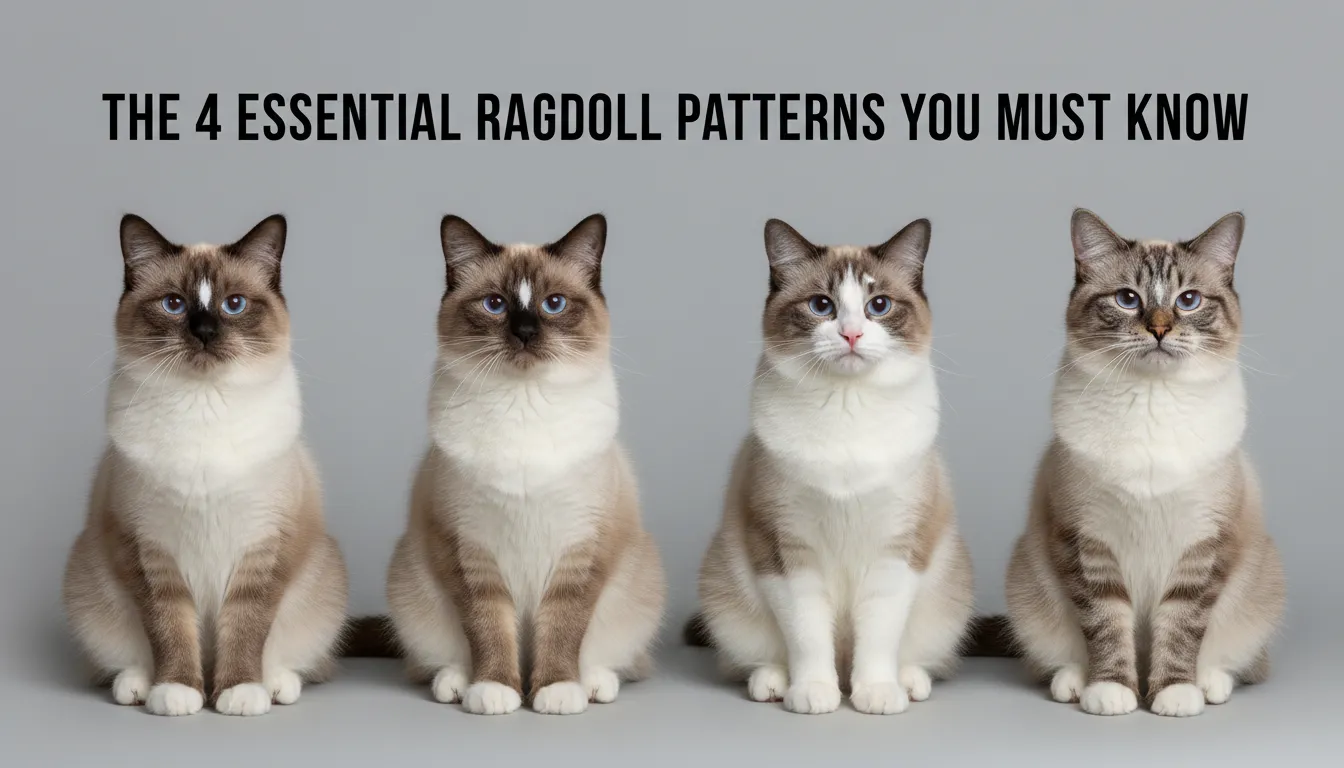
Once you’ve identified the color, you must determine the pattern. This is how the white fur interacts with the colored points. In the world of high-end breeding, the “placement” of white can be the difference between a Show Quality cat and a beloved Pet Quality companion.
Colorpoint: The Pure Classic (Zero White Rule)
The Colorpoint pattern is the most traditional look. These cats have absolutely no white fur anywhere on their bodies.
-
The Mask: A solid “mask” of color covers the entire face, including the whisker pads.
-
The Points: Ears, tail, and all four paws must be a deep, solid color.
-
Pro Secret: If you find even a tiny “locket” (a white spot) on a Colorpoint, it is considered a disqualification in the show ring, though it makes them no less beautiful as pets.
Mitted: The “Gloves and Hocks” Identification
Mitted Ragdolls look like Colorpoints but with a high-fashion upgrade: white accessories.
-
Front Paws: They wear “mittens”—pure white paws that stop at the wrist joint.
-
Back Legs: These must have “hocks”—white fur that goes up the back of the leg, stopping mid-thigh.
-
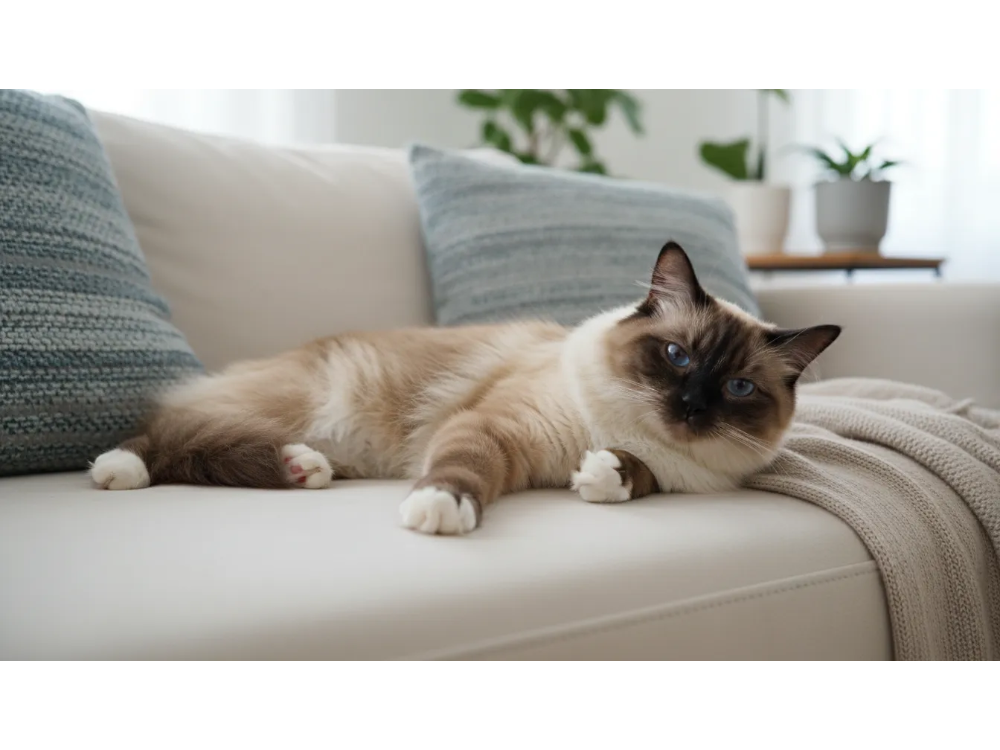
The Belly Stripe: A crucial identifier! True mitted cats have a white stripe extending from the chin, down the chest, and all the way through the underbelly.
-
The Blaze: Many mitted cats have a White Blaze (a star or diamond) on their nose.
Bicolor: The Famous “Inverted V” Mask
This is the “poster child” of the breed. Bicolors have the highest contrast and are the most requested by new owners.
-
The Face: A white Inverted “V” starts on the forehead and extends down the muzzle.
-
The Saddle: The color is restricted to the ears, tail, and a “saddle” or patch on the back.
-
The Legs: Unlike the mitted pattern, a Bicolor should have entirely white legs and a pink nose.
Van: The 20% Color Threshold
The Van pattern is the rarest of the four. It carries the highest amount of white spotting.
-
Color Placement: Color is strictly limited to the ears and the tail.
-
The 20% Rule: To be a “Van,” the cat must be at least 80% white. Any significant spots on the body are penalized by judges.
Visual Overlays: Lynx, Tortie, and the Rare “Torbie”
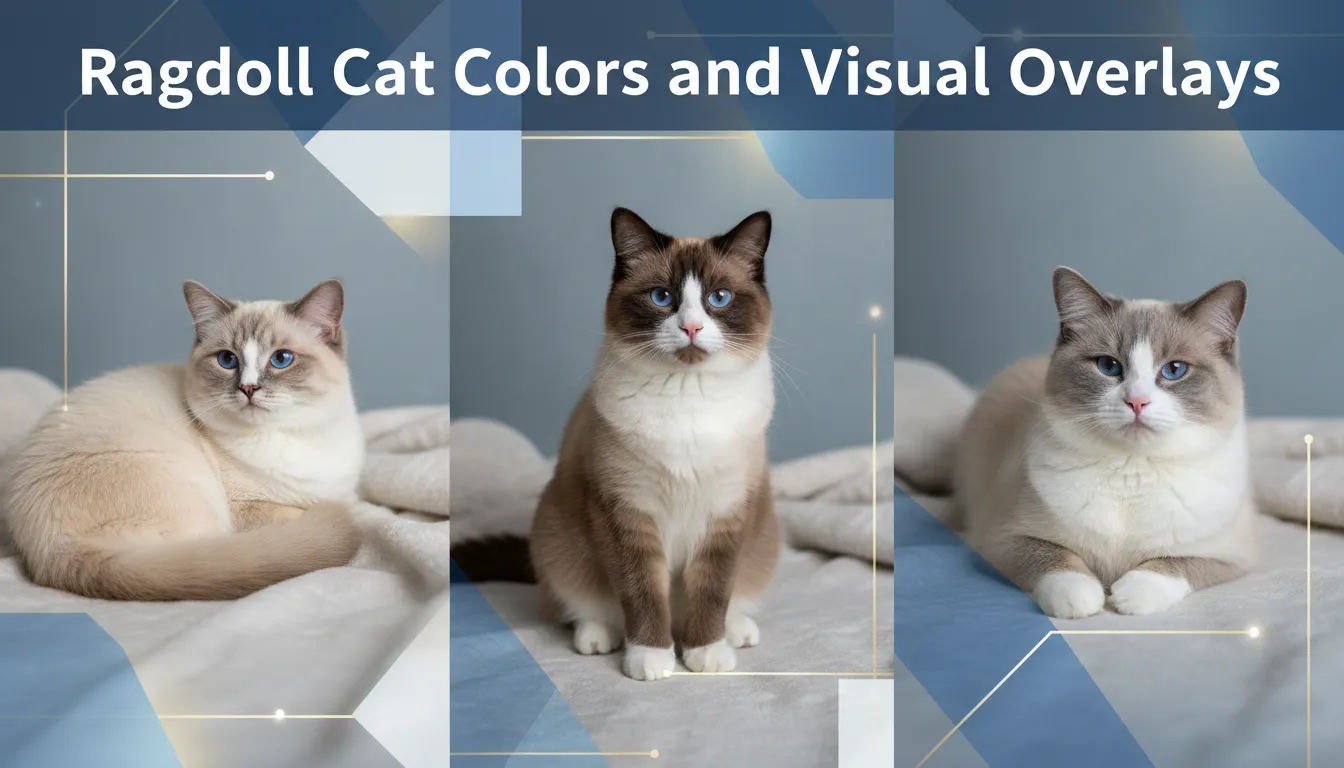
Think of “Overlays” as a second layer of style applied over the colors and patterns we just discussed. This is where Ragdolls get that “exotic” or “wild” look that many owners mistake for a different breed entirely.
Spotting the “White Eyeliner” (The Lynx Secret)
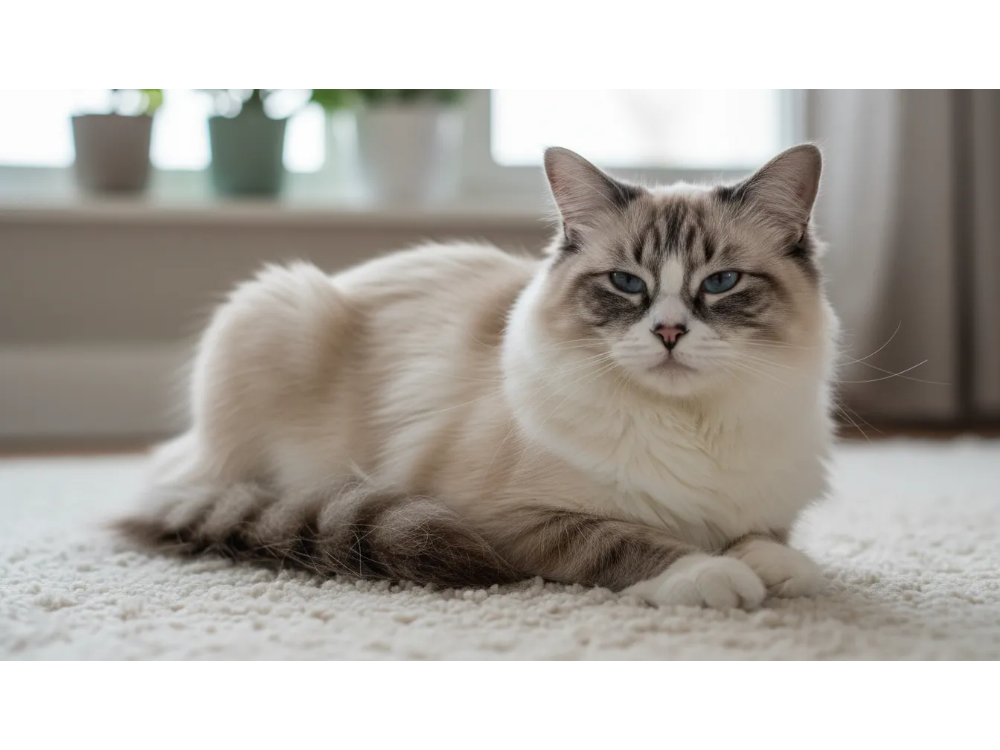
The Lynx pattern (also known as Tabby Point) replaces solid point color with distinct “ghost stripes” or barring.
-
The M-Mark: You will see a faint “M” shape etched onto the forehead.
-
Pro Identification: The easiest way to spot a Lynx is the White Eyeliner. These cats have a pale, almost white ring around their eyes and a “thumbprint” (a lighter spot) on the back of their ears.
-
The Look: It gives the Ragdoll a majestic, forest-cat appearance without losing the docile personality.
Why 99% of Tortie Ragdolls are Female
Tortoiseshell (Tortie) Ragdolls feature mottled patches of Red or Cream mixed into their base color (Seal or Blue).
-
The Snowflake Effect: No two Torties are identical. The patches are randomized, often creating a “split-face” look that is highly prized.
-
The Genetic “Why”: The gene for red color is carried on the X chromosome. Since females are XX, they can carry both a non-red gene and a red gene simultaneously. Males (XY) usually can only be one or the other—making a male Tortie a genetic anomaly (and usually sterile).
The “Torbie” Masterclass
A Torbie is the ultimate combination: it is a Tortie (mottled colors) with a Lynx (stripes) overlay.
-
How to ID: Look for the stripes of a Lynx but with “blips” of red or cream breaking through the pattern. This is arguably the most complex and visually stunning variety in the breed.
The 2026 Cherubim Shift: Mink, Sepia, and Solid Ragdolls
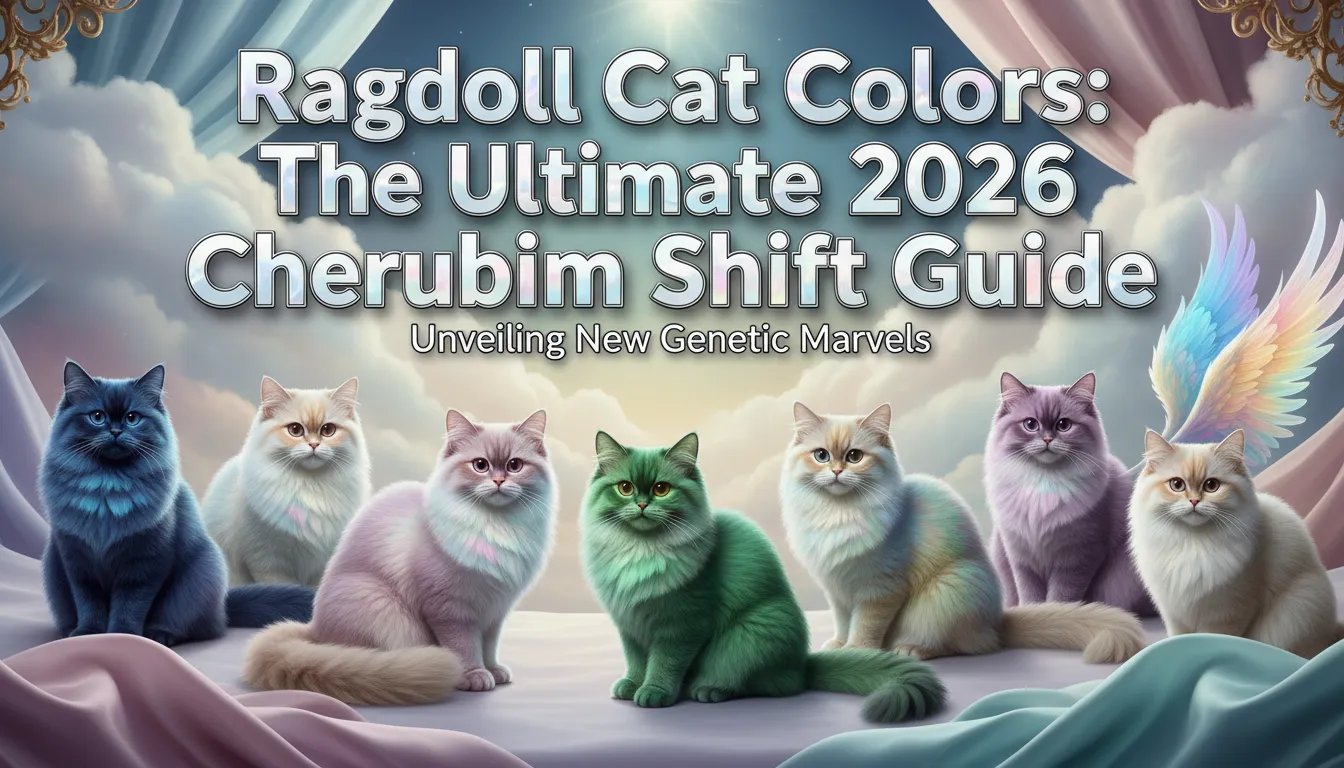
As we move through 2026, the Ragdoll world is split between “Traditionalists” and those embracing the Cherubim classification. If you see a Ragdoll that looks “too dark” as a kitten or doesn’t have blue eyes, you are likely looking at a Cherubim variant.
Why These Are “Non-Traditional” (New Breed Standards)
While traditional Ragdolls are pointed and born white, Mink, Sepia, and Solid Ragdolls are born with their color already visible.
-
Mink Ragdolls: These have a much thicker, plusher coat than traditional points. They are born with color and possess a rich, “minky” texture.
-
Sepia Ragdolls: The darkest of the non-traditional types. They often look like a solid-colored cat at birth and have the most intense coat pigment.
-
Solid Ragdolls: These cats lack the “pointed” restriction entirely. A Solid Seal Ragdoll will look like a black cat, yet possess the distinct floppy Ragdoll temperament.
Eye Color Differences: Aqua, Green, and Gold
The most controversial part of the 2026 Cherubim shift is the eye color. According to strict CFA and TICA traditional standards, a Ragdoll must have blue eyes. However:
-
Minks: Typically possess stunning Aqua (blue-green) eyes.
-
Sepias & Solids: Can have Green, Gold, or Copper eyes.
Expert Warning: Many backyard breeders try to sell Minks as “Rare Blue-Eyed Traditions” for a higher price. Always check the eye hue—if it’s greenish-blue (Aqua), it’s a Mink, not a traditional point.
Pro Secrets: Identifying Your Kitten’s Color (The Timeline)
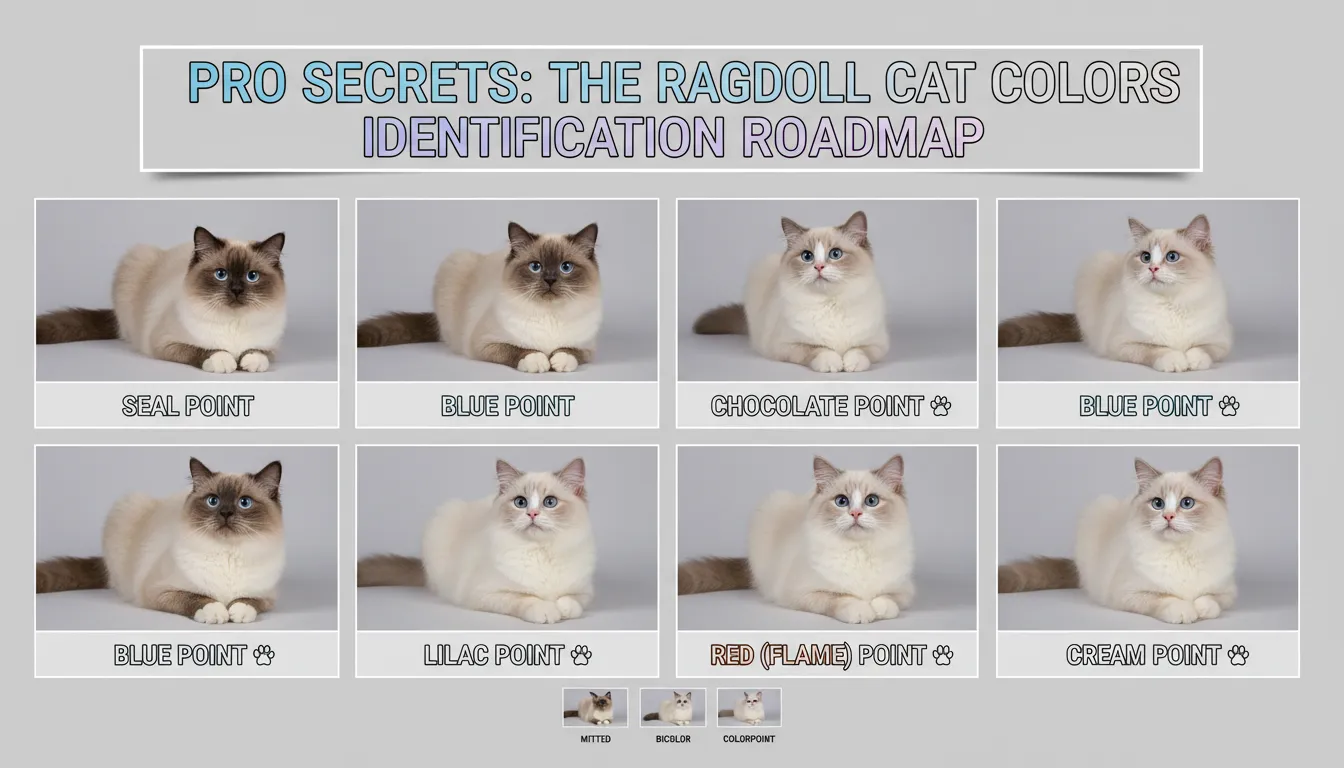
As a long-time breeder, I’ve seen countless owners second-guess their kitten’s color during the first few months. Because the Tyrosinase enzyme reacts to the environment, your kitten is essentially a “work in progress” for the first few years of its life.
10 Days to 4 Years: The Progression Chart
Understanding the Ragdoll cat colors timeline will save you from “buyer’s remorse” or unnecessary confusion.
-
Day 1–7: Pure white. No visible markings.
-
Week 2: The “Ghosting” phase. You will see faint smudges of color on the rim of the ears and the tip of the tail.
-
Month 3: The mask begins to “bloom.” This is the best time for a breeder to confirm if the cat is Seal (dark) or Blue (gray).
-
Year 2: Patterns like Mitted and Bicolor are now set, but the “Saddle” (back color) is still filling in.
-
Year 4: Full Maturity. The coat has reached its maximum density and darkest pigment.
Expert Tip: The “Sun-Bleaching” Warning
Many owners don’t realize that Ragdoll cat colors are physically sensitive to sunlight.
-
The Issue: If your dark Seal Point spends all day in a sunny window, their rich chocolatey-brown fur can develop a “rusty” or reddish tinge.
-
The Fix: This isn’t permanent damage, but it ruins the “Show Look.” To keep those points crisp and dark, limit direct midday sun exposure.
Common Mistake: Buying a “Fake” Lilac
This is the most common “scam” in the Ragdoll world. Because Lilac is rare and expensive, some breeders sell Blue kittens as Lilacs.
-
The Pro Check: Look at the Paw Pads. A Blue kitten will have slate-gray pads. A true Lilac must have Lavender-Pink pads. If the pads are gray, you are paying Lilac prices for a Blue cat.
People Also Asked (Deep FAQ)
To wrap up this 2026 guide, I’ve pulled the most critical questions from the Ragdoll cat colors community and show registries to give you the final word on identification.
What is the rarest color of a Ragdoll cat?
The Lilac Point is widely considered the rarest traditional Ragdoll color. It requires both parents to carry the “dilute” gene for the brown base. Outside of traditional standards, the Cinnamon and Fawn variants are the most difficult to find because very few catteries have the specific genetic markers to produce them.
Do Ragdoll cats change color as they get older?
Yes, absolutely. Because of their temperature-sensitive albinism, Ragdolls naturally darken as they age. As a cat gets older, their circulation slows down and their skin temperature drops, which triggers the Tyrosinase enzyme to produce more pigment. A senior Ragdoll will almost always have a darker “saddle” (back) than a young adult.
Does coat color affect a Ragdoll’s personality?
Scientifically, no. There is no proven link between a Ragdoll’s color and its temperament. However, many breeders observe that Red (Flame) Points tend to be particularly “dog-like” and outgoing, while Seal Points often display the classic “floppy” and mellow nature the breed is famous for.
How can I tell if my Ragdoll is a “True” Bicolor?
A “True” Bicolor will have a pink nose and a symmetrical white inverted “V” on the face. If your cat has a dark spot on its nose or excessive color on its front legs, it might be a “High Mitted” or a poorly marked Bicolor. A DNA test for the “S” (White Spotting) gene is the only way to distinguish a genetic True Bicolor from a High-Mitted cat.
Conclusion: Which Ragdoll Shade Fits Your Home?
Choosing from the vast array of Ragdoll cat colors is more than just an aesthetic choice; it’s about appreciating a living masterpiece that changes over time. Whether you choose the striking contrast of a Seal Bicolor or the ethereal softness of a Blue Lynx Mitted, your Ragdoll will continue to surprise you as their coat “blooms” over the years.
What color is your Ragdoll? Did you find out your “Blue” is actually a “Lilac” after checking the paw pads? Share your identification stories in the comments below!