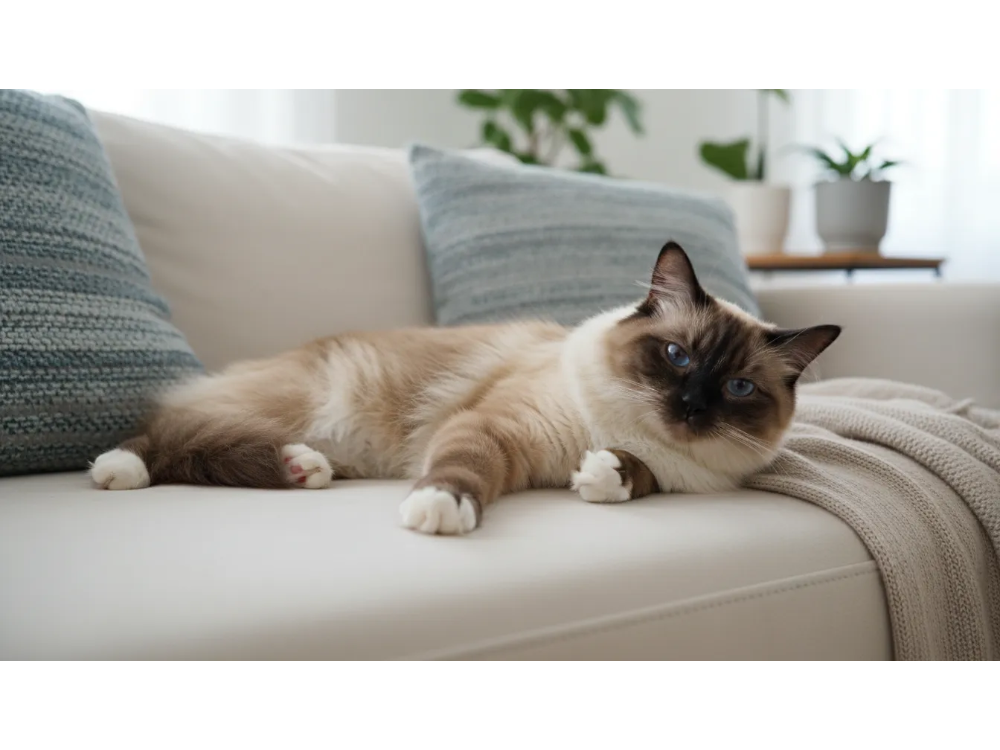
The “Ragdoll Effect” & Personality Traits
When discussing the most desirable Ragdoll traits, the conversation always begins with their legendary temperament. Unlike the typical aloof nature associated with most felines, the Ragdoll was selectively bred to be a high-contact, social companion. This breed doesn’t just live in your house; they participate in your life, earning them the reputation of being one of the most affectionate cat breeds in existence.
The Science of the “Floppy” Response
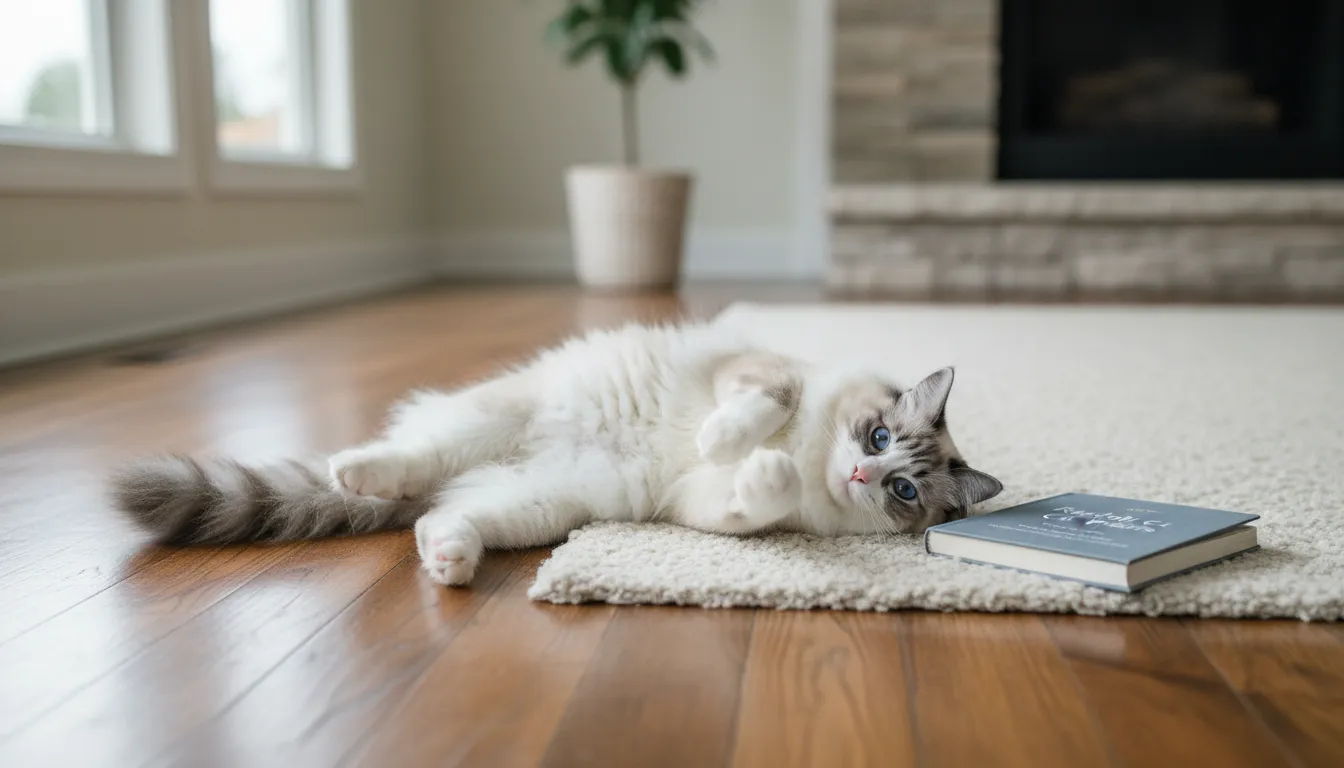
The name “Ragdoll” is derived from their most famous physical and behavioral quirk: the tendency to go completely limp when picked up. While some competitors imply this is a lack of muscle tone, it is actually a profound sign of a docile temperament and absolute trust.
-
The Trust Factor: This “floppy” trait is a bio-mechanical response to feeling safe.
-
Handling: Because of this trait, Ragdolls are exceptionally easy to handle for vet visits or grooming, as they rarely tense up or resist human touch.
The “Puppy-Cat” Syndrome
A standout among Ragdoll personality traits is their dog-like devotion. If you are looking for a cat that greets you at the door after a long day, the Ragdoll is your primary choice.
-
Loyal Shadows: They exhibit a “shadowing” behavior, following their owners from the kitchen to the home office just to be in the same room.
-
Fetch and Play: Their intelligence allows them to learn tricks. Many Ragdoll owners report their cats naturally playing fetch with hair ties or soft toys, a trait usually reserved for canines.
Social IQ: A Family-First Breed
One of the most important Ragdoll traits for families is their “soft-pawed” nature. Ragdolls are famous for keeping their claws retracted during play, making them incredibly safe for households with young children.
-
Compatibility: Their low-territorial drive means they integrate seamlessly with other pets. Whether you have a Golden Retriever or another feline, the Ragdoll’s serene energy often acts as a “peacekeeper” in multi-pet homes.
-
Emotional Intelligence: Owners often describe Ragdolls as “empathetic,” as they tend to seek out their humans specifically when they sense stress or sadness.
Physical Traits, Colors, and Patterns
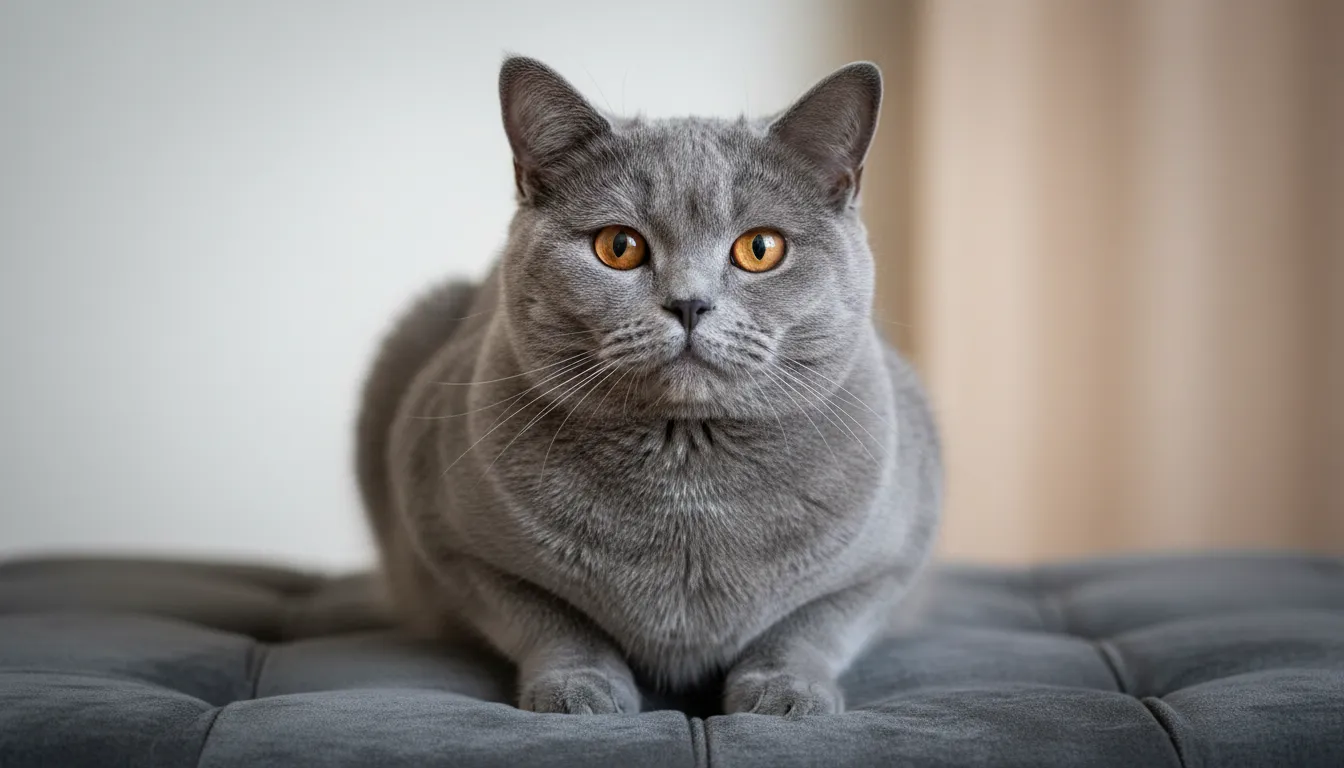
Understanding the physical Ragdoll traits is crucial for identifying a true purebred and appreciating the breed’s aesthetic complexity. Beyond their massive size, their appearance is defined by a specific genetic makeup that dictates everything from the depth of their blue eyes to the texture of their fur.
The Signature Gaze: Vivid Blue Oval Eyes
One of the most non-negotiable Ragdoll physical traits is the color of their eyes. According to breed standards (CFA/TICA), a purebred Ragdoll must have large, oval-shaped eyes in varying shades of blue.
-
The “Albino” Link: This blue color is linked to the temperature-sensitive albinism gene, which is also responsible for their pointed markings.
-
Expression: Their eyes are set slightly wide, giving them a characteristic “sweet” and inquisitive expression that owners find irresistible.
The Ragdoll Coat: Silk Without the Hassle
While they look like high-maintenance long-haired cats, their coat is actually a “semi-long” single layer.
-
Rabbit-Like Texture: The fur is often compared to rabbit fur because it is incredibly soft and silky.
-
Reduced Matting: Because Ragdolls lack a thick, woolly undercoat, they are much less prone to painful mats and tangles compared to Persians or Maine Coons.
-
The “Ruff” and “Knickerbockers”: Noticeable Ragdoll traits include a magnificent “ruff” (mane) around the neck and “knickerbockers” (long fur) on the hind legs.
The Pointed Palette: Colors and Patterns
To satisfy the “Buyer Intent,” we must categorize their complex patterns. Ragdolls are “pointed,” meaning their extremities (face, ears, tail, legs) are darker than their body.
| Pattern Type | Description | Key Feature |
| Colorpoint | Classic look with dark points and no white fur. | Deep contrast. |
| Mitted | Dark points but with white “mittens” on front paws and “boots” on back. | White chin & belly stripe. |
| Bicolor | Features an inverted white “V” on the face and a white chest/stomach. | The most popular show-look. |
| Lynx Point | Tabby-style “M” markings on the forehead and striped points. | Wild cat appearance. |
Genetic Fact: Ragdoll kittens are actually born solid white. Their true Ragdoll traits and colors only begin to emerge after 10–14 days and continue to deepen for years.
The 4-Year Maturity Matrix: How Ragdoll Traits Evolve
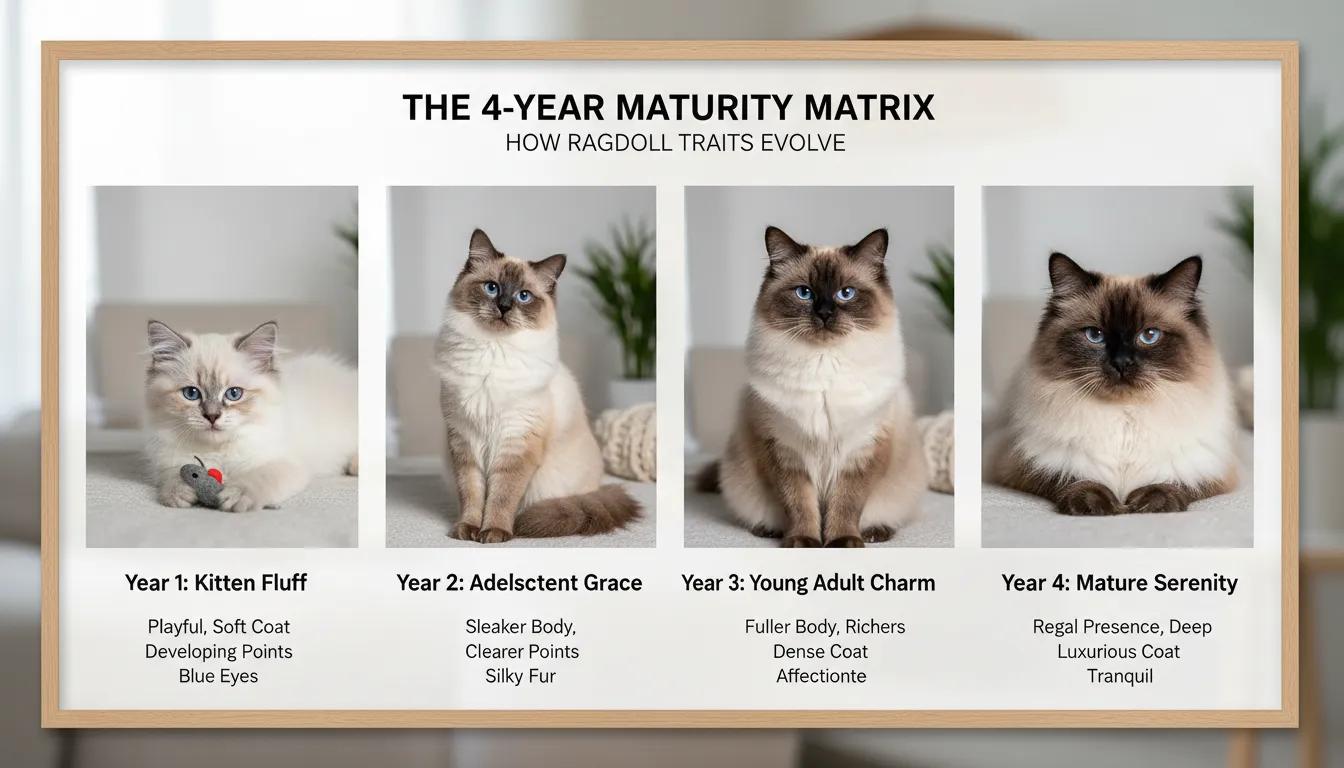
A common misconception among new owners is that a Ragdoll reaches its peak beauty in the first year. In reality, one of the most distinctive Ragdoll traits is their exceptionally slow maturation process. Unlike most domestic cats that are fully grown by 12 months, Ragdolls are “slow burners,” taking up to four full years to reach their final size, weight, and coat density.
The Developmental Timeline
Tracking Ragdoll traits through their growth stages is essential for monitoring their health and ensuring they are meeting breed standards.
| Age Stage | Physical Development | Expected Weight (Avg) |
| Kitten (0-6 Months) | Born white; points (color) begin to appear. | 3 – 6 lbs |
| Adolescence (1-2 Years) | Rapid skeletal growth; “lanky” phase. | 8 – 12 lbs |
| Young Adult (2-3 Years) | Coat begins to thicken; “Ruff” (mane) develops. | 10 – 15 lbs |
| Full Maturity (4 Years) | Final muscle mass and deep coat coloration. | 15 – 20+ lbs |
The “Spurt” Factor
Owners should be aware that Ragdoll growth traits often occur in unpredictable spurts. Your cat might look “out of proportion” during its second year—with legs that seem too long for its body—before finally filling out into the muscular, broad-chested “gentle giant” standard.
-
Coat Maturation: The silky texture and full “plume” tail often don’t reach their maximum glory until the third winter.
-
Weight Management: Because they grow for so long, it is critical to distinguish between “growth weight” and “obesity.” A healthy mature male can easily exceed 20 pounds without being overweight, provided the weight is muscle and bone, not just fat.
Color Deepening
Another fascinating Ragdoll trait is that their coat color is temperature-sensitive. As they age and their circulation changes, their “points” will continue to darken and refine until they reach full maturity at age four. This means the kitten you buy today will look significantly more dramatic and defined by its fourth birthday.
Health & Safety Traits: Protecting the Vulnerable Giant
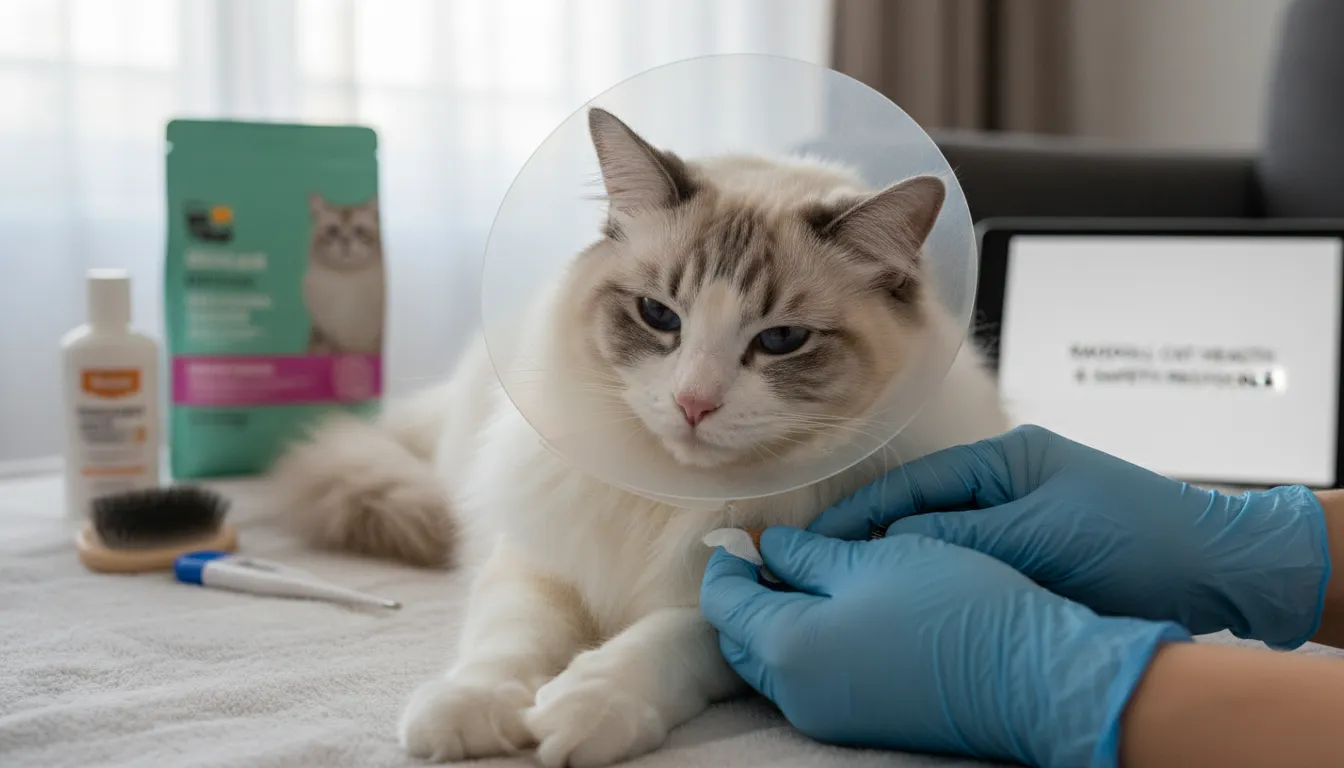
While their beauty and temperament are world-renowned, certain Ragdoll traits related to health and safety require specific attention from responsible owners. Because this breed is so docile and trusting, they lack the “street smarts” and defensive instincts found in more active breeds like the Siamese or Bengal.
The “Pain Tolerance” Myth: A Critical Warning
One of the most dangerous misconceptions about Ragdoll personality traits is the 1960s-era myth that they do not feel pain or are “immune” to injury because they go limp.
-
The Reality: Ragdolls feel pain exactly like any other cat. However, their stoic and docile nature means they often mask pain or discomfort.
-
Owner Responsibility: Because they don’t always cry out or hiss when hurt, owners must be extra vigilant for subtle signs of illness or injury, as a Ragdoll’s silent nature can hide serious medical issues.
Genetic Health Traits: What to Screen For
Despite their robust appearance, certain hereditary Ragdoll traits can lead to health complications if not monitored through genetic testing:
-
Hypertrophic Cardiomyopathy (HCM): A heart condition where the muscle wall thickens. Reputable breeders now test for the specific Ragdoll HCM mutation.
-
Polycystic Kidney Disease (PKD): While less common than in Persians, it is a known trait that can lead to kidney failure.
-
Joint Health: Due to their massive size and 4-year growth cycle, they can be prone to hip dysplasia or arthritis if allowed to become obese.
The “Indoor-Only” Requirement
The very Ragdoll traits we love—their lack of aggression and total trust in strangers—make the outdoors a death trap for them.
-
Lack of Defense: A Ragdoll is more likely to try to befriend a stray dog or a malicious stranger than to run or fight back.
-
Theft Risk: Because they are stunning and friendly, they are high-risk targets for theft.
-
Safety Intent: We strongly recommend an “Indoor-Only” lifestyle, supplemented by a “Catio” (enclosed patio) or harness training if they crave fresh air.
Is a Ragdoll Right for You?
Choosing a pet based on Ragdoll traits requires a balance between admiring their beauty and understanding the commitment they demand. While they are low-maintenance in terms of temperament, they are “high-investment” in terms of social needs and long-term care.
Ragdoll vs. Maine Coon vs. Birman: Quick-Glance Comparison
To help you decide, we have compared the most distinctive Ragdoll traits against similar “fluffy” breeds:
| Feature | Ragdoll | Maine Coon | Birman |
| Energy Level | Low to Medium | High (Active Hunter) | Medium |
| Size | Large (15–20 lbs) | Extra Large (18–25 lbs) | Medium (10–12 lbs) |
| Social Need | Very High (Shadow Cat) | High (Independent) | Moderate |
| Vocalization | Very Quiet (Soft Chirps) | Talkative (Trills/Meows) | Moderate |
| Climbing | Prefers Floor/Lap | Prefers High Perches | Moderate |
The “Ground-Dweller” Factor: A Unique Living Requirement
Unlike many cats that enjoy “vertical territory” (high shelves and tall trees), a notable Ragdoll trait is their preference for staying low to the ground.
-
Home Setup: Because they can be slightly clumsy, you don’t need 7-foot cat trees. Instead, invest in wide, sturdy scratching posts and low-entry litter boxes to accommodate their large frames.
Risk vs. Cost Analysis
-
The Cost: Purebred Ragdolls are an investment. Beyond the initial price ($800–$2,500), the cost of high-quality “large breed” wet food and regular HCM screenings should be factored into your decision.
-
The Risk (Loneliness): The biggest risk of owning a Ragdoll is their social dependency. If you work 12 hours a day away from home, a Ragdoll may develop separation anxiety. They thrive best in homes with remote workers, families, or other pets.
The Verdict
If you want a “living ornament” that stays out of the way, this is not the breed for you. But if you want a docile, loyal companion who will greet you at the door and sleep on your chest, the Ragdoll traits make them the ultimate feline partner.
Expert Care Tips for Ragdoll Owners
To maintain the peak health and beauty of your cat, you must align your care routine with specific Ragdoll traits. Because they are larger and more social than the average domestic cat, their needs for nutrition and grooming are unique.
Expert Care Tips
-
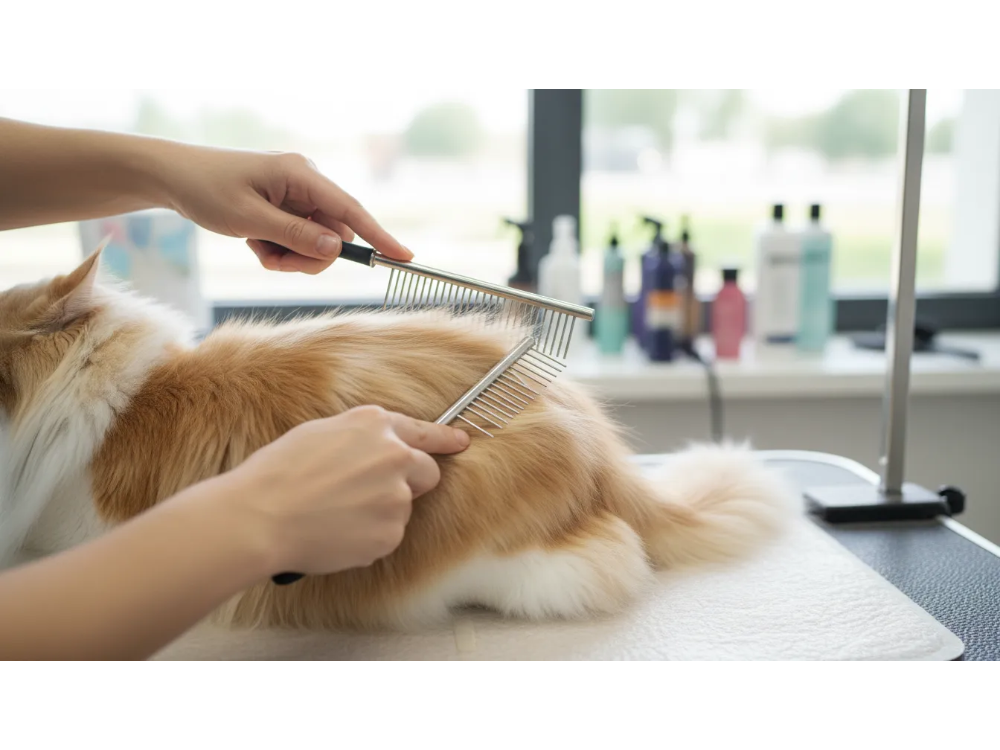
Grooming: Since Ragdolls have a single-layer coat, brush them at least twice a week with a stainless steel comb. This prevents the few tangles that might form under the armpits and behind the ears.
-
Hydration: Due to their predisposition to bladder stones (as seen in our health analysis), always provide a water fountain. Ragdolls are often “lazy” drinkers, and moving water encourages them to stay hydrated.
-
Nutrition: Use a “Large Breed” specific formula. Because Ragdoll growth traits continue until age four, they require sustained protein levels to support bone density without adding excess fat.
Frequently Asked Questions (FAQ)
Q1: Are Ragdolls hypoallergenic?
No. While they lack a thick undercoat (which reduces dander), they still produce the Fel d 1 protein in their saliva and skin. If you have a severe cat allergy, a Ragdoll will likely still trigger it.
Q2: Do Ragdoll cats shed a lot?
Compared to Persians, they shed significantly less. However, you will notice seasonal shedding during spring and autumn. Regular brushing minimizes the amount of fur left on your furniture.
Q3: Can Ragdoll cats be left alone?
Not for long periods. One of the core Ragdoll personality traits is social dependency. If left alone for more than 8–10 hours regularly, they can become depressed or destructive. They thrive best in pairs or with constant human company.
Q4: Why does my Ragdoll follow me everywhere?
This is the famous “Shadow” trait. They view their humans as part of their social pack. This behavior is a sign of a healthy, well-adjusted Ragdoll who trusts its owner completely.
Q5: Are male or female Ragdolls more affectionate?
While individual personalities vary, many owners report that male Ragdolls tend to be slightly more “floppy” and cuddly, whereas females can be a bit more independent while still remaining very social.